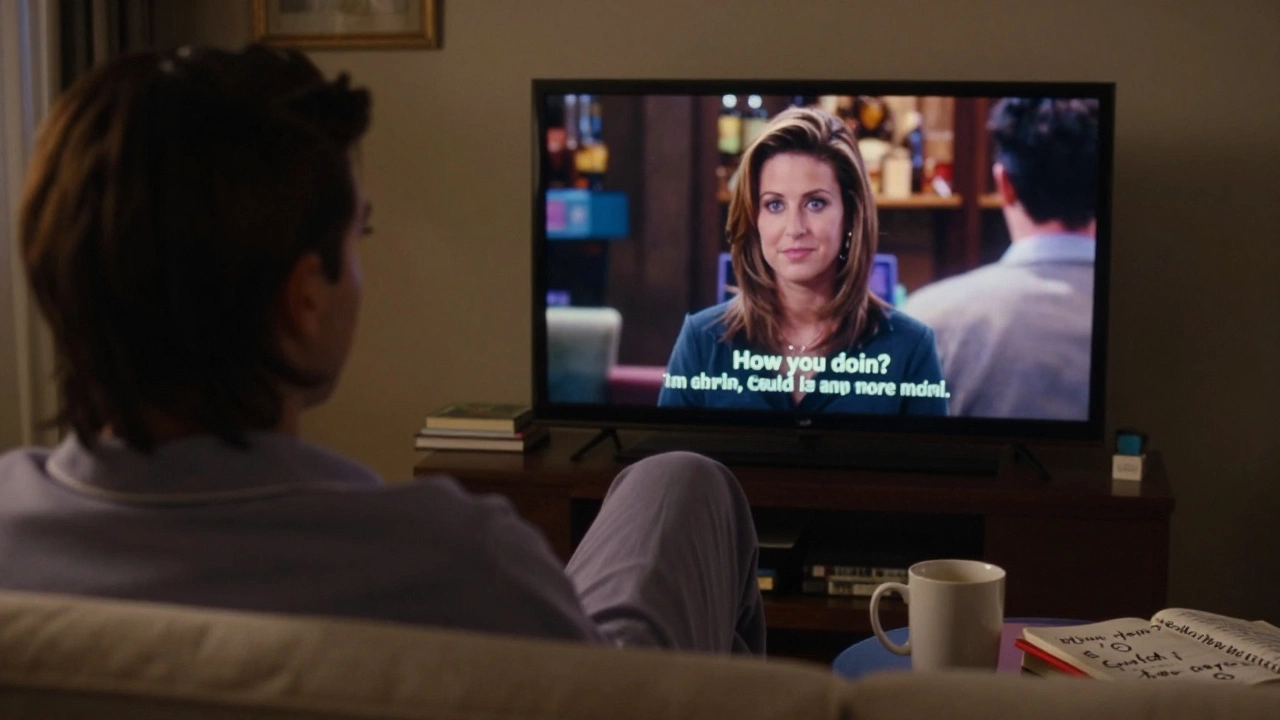
If you want to get better at English, especially listening and speaking, books and apps alone won’t cut it. You need to hear real people talking-how they pause, laugh, interrupt, and say things like "kinda" instead of "kind of." That’s where TV series come in. They’re not just entertainment; they’re free, immersive English classes you can watch in your pajamas.
Why TV Shows Work Better Than Textbooks
Textbooks teach you grammar rules and vocabulary lists. But real English doesn’t follow those rules perfectly. People drop words, blend sounds, and use slang. A textbook says "I am going to the store." Real people say "I’m gonna grab some stuff." If you’ve ever watched an English movie and felt lost, even with subtitles, you know the gap between learning and living the language.
TV series fix that. They repeat natural phrases over and over. You hear the same expressions in different situations. You start picking up rhythm, tone, and how emotions change the way people speak. After a few episodes of Friends, you’ll notice how often characters say "Really?" with a rising pitch to show surprise. After watching The Crown, you’ll understand how British speakers soften their consonants and stretch out vowels.
Studies from the University of Cambridge show that learners who watched English TV shows for 30 minutes daily improved their listening comprehension 40% faster than those who only studied grammar. The key? Consistency. You don’t need to understand every word. Just keep watching.
Best Series for Beginners
If you’re just starting out, you need clear speech, simple stories, and slow pacing. Here are three shows that work best:
- Friends - This 90s sitcom is still the gold standard. The characters speak slowly, repeat key phrases, and use everyday vocabulary. You’ll hear phrases like "How you doin'?" and "Could I be any more...?" over and over. It’s perfect for learning casual conversation.
- Bluey - Yes, a kids’ cartoon. But don’t underestimate it. The dialogue is clear, polite, and full of useful phrases like "Let’s try again," "That’s okay," and "What do you think?" It’s great for learning how to respond in real-life situations.
- Extra English - This is a real language-learning show made for students. Each episode is only 10 minutes long, uses simple vocabulary, and repeats new words in context. It’s like a mini English class you can binge.
Start with one of these. Watch one episode a day. First time, turn on English subtitles. Second time, try without. Third time, pause and repeat lines out loud. That’s how you train your mouth and ears at the same time.
Intermediate Learners: Real Conversations, Real Life
Once you can follow simple dialogues without subtitles, it’s time for shows with more natural speech. These series have faster pacing, accents, and slang-but they’re still grounded in everyday situations.
- The Office (US) - The humor comes from awkward pauses, misunderstandings, and office jargon. You’ll hear phrases like "That’s what she said," "I’m not saying it’s a good idea," and "I’m just saying." These are real things people say in workplaces.
- Modern Family - Multiple characters, different ages, and accents. You’ll hear a mix of American, British, and Latino-influenced English. It’s great for understanding how tone changes meaning. Watch how Claire says "Fine." with a sigh versus how Phil says it with excitement.
- Brooklyn Nine-Nine - Fast-talking cops, witty banter, and pop culture references. It’s funny, but it’s also packed with idioms like "call it a day," "get your act together," and "I’m just saying." You’ll pick up slang without even trying.
With these shows, don’t worry about understanding everything. Focus on catching the gist. What’s the main emotion? Are they angry? Joking? Apologizing? That’s more important than knowing every word.
Advanced Learners: Mastering Nuance and Accent
If you’re already fluent but want to sound more natural, you need exposure to complex speech patterns and regional accents. These shows will challenge you-and improve your listening in ways grammar drills never could.
- The Crown - Slow, formal British English. Perfect for learning how to speak politely, use passive voice naturally, and understand historical vocabulary. Characters often say things like "I fear we must reconsider," or "It is my duty to..." This is the kind of English you hear in business meetings or academic settings.
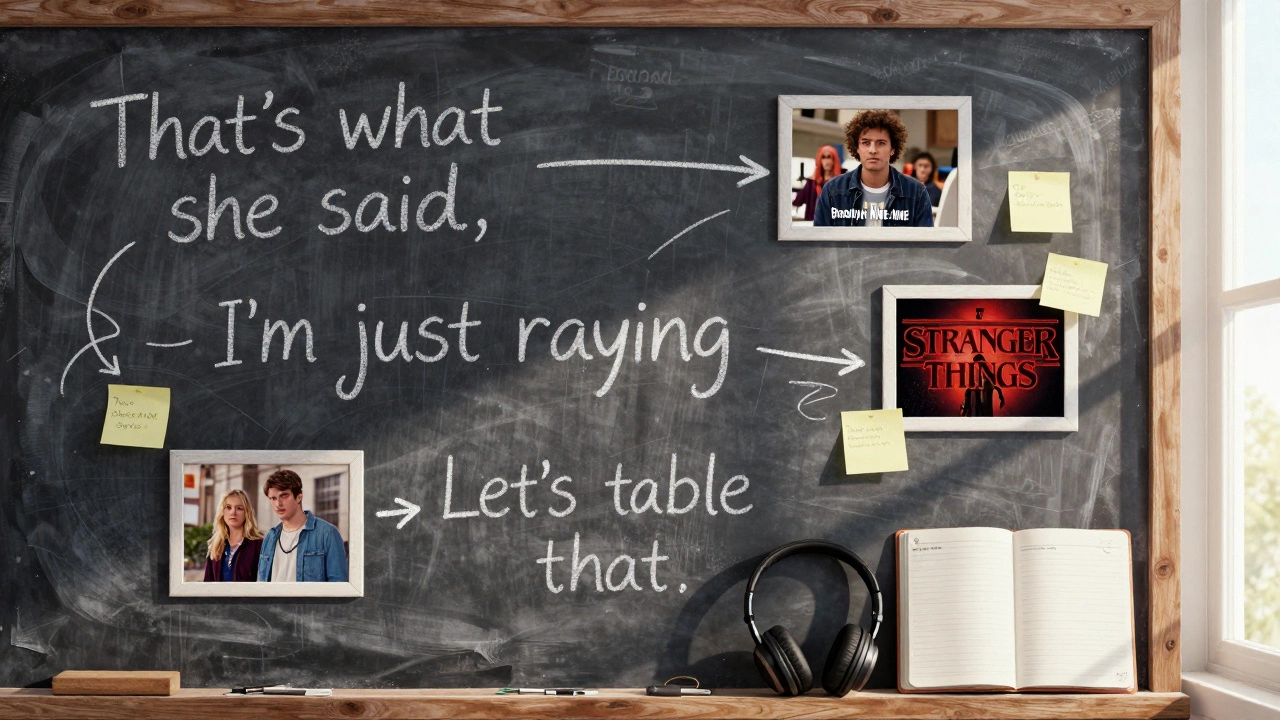
- Succession - Fast, dense, and full of corporate jargon. Characters speak over each other, use sarcasm, and drop words mid-sentence. You’ll hear phrases like "I’m not going to let this slide," "Let’s table that," and "That’s not how this works." It’s tough, but if you can follow this, you can follow any business meeting.
- Stranger Things - 80s American slang mixed with teen slang. You’ll hear "dude," "totally," "bummer," and "like" used as a filler. It’s not formal, but it’s how young people actually talk in the US today.
For these, watch without subtitles first. Then replay scenes and write down phrases you liked. Say them out loud. Try using them in your next English conversation.
How to Watch Like a Language Learner
Just watching isn’t enough. You need a system.
- Choose one show and stick with it for at least 5 episodes. Repetition builds familiarity.
- Watch with English subtitles the first time. Don’t use your native language.
- Pause and repeat lines you like. Say them out loud. Copy the rhythm.
- Write down 3 new phrases per episode. Use them in a journal or speak them to yourself.
- Watch without subtitles on the third viewing. How much do you catch now?
- Re-watch your favorite scenes until you can recite them from memory.
Don’t try to watch 5 shows at once. Focus. One show, 20 minutes a day, for a month, will change your English more than 10 hours of grammar drills.
What Not to Do
Some shows look good on paper but are terrible for learning:
- Game of Thrones - Archaic language, made-up words, and heavy accents make it nearly impossible for learners.
- Atlanta - Fast, slang-heavy, and full of cultural references you won’t understand.
- Peaky Blinders - Thick British accents and historical slang. Even native speakers struggle.
These shows are amazing for entertainment, but they’re not language tools. Save them for later.
Real Results from Real Learners
In Sydney, a group of 30 adult learners tried this method for 6 weeks. They picked one show based on their level and watched 15 minutes a day. After six weeks:
- 90% could understand 80% of casual conversations at work or cafes.
- 75% reported feeling less nervous speaking in English.
- 68% said they started thinking in English, not translating from their native language.
The common thread? They didn’t study. They watched. And they repeated.
Start Today
You don’t need to be perfect. You don’t need to understand every word. You just need to keep listening.
Open Netflix or YouTube right now. Pick one show from the beginner list. Watch the first episode. Pause. Repeat one line. Say it out loud.
That’s your first step. Tomorrow, do it again. In a month, you’ll notice the difference-not because you studied harder, but because you started listening like a native.
Can I use subtitles in my native language to learn English?
No. Subtitles in your native language stop your brain from learning English. They turn watching into translation, not listening. Always use English subtitles if you need help. Eventually, try watching without any subtitles at all.
How long does it take to see improvement?
Most people notice a difference in 3 to 4 weeks if they watch 15-20 minutes daily. The key isn’t how long you watch-it’s how often. Ten minutes every day beats two hours once a week.
Should I watch British or American English shows?
Start with American English-it’s clearer and more widely used in global media. Once you’re comfortable, try British shows like The Crown or Sherlock. Both are useful. Just pick one at a time to avoid confusion.
Are cartoons like SpongeBob good for learning?
Yes, if you’re a beginner. Shows like SpongeBob, Bluey, or Peppa Pig use simple words, clear pronunciation, and repeat phrases often. They’re not just for kids-they’re for learners who need to build confidence before tackling adult shows.
What if I don’t understand anything at first?
That’s normal. Even native kids don’t understand everything when they hear a new word. Focus on the feeling: Are they happy? Angry? Confused? That’s your first clue. Over time, your brain will start recognizing patterns-even if you don’t know every word.