
IIT JEE Preparation Strategy Calculator
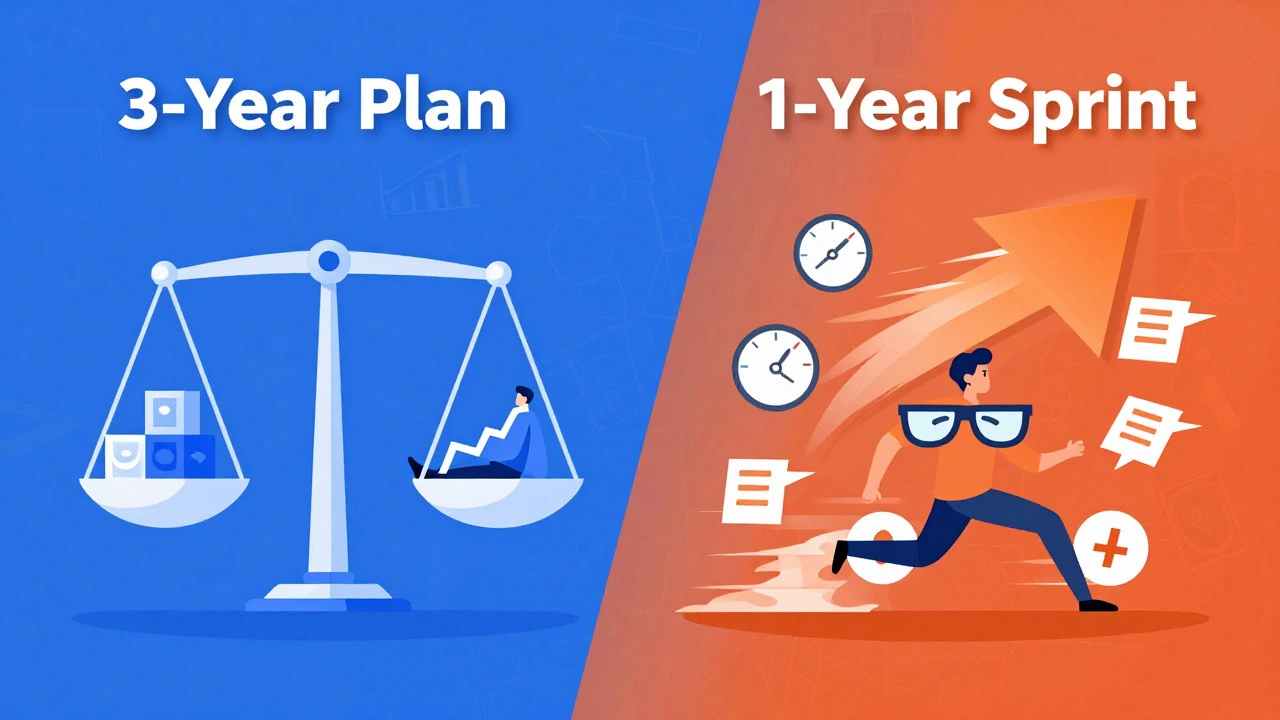
The Standard Approach
Starting from Class 11
- ✓ Focus on conceptual depth
- ✓ Balanced with school curriculum
- ✓ Long-term retention
The Sprint Approach
Class 12 or Drop Year
- ⚠ High intensity required
- ⚠ Focus on PYQs & Speed
- ⚠ Strategic topic selection
Your Personalized Roadmap
Summary goes here.
There is no single answer to how much time it takes to crack the IIT JEE, which is the Joint Entrance Examination used for admission to Indian Institutes of Technology. Some students clear it in one year of intense focus. Others spend three years building a foundation from Class 11. The truth lies somewhere in between, depending on your starting point, your consistency, and your strategy.
If you are asking this question, you are likely feeling overwhelmed by the sheer volume of the syllabus or worried that you have started too late. Let’s break down the realistic timelines, the hidden traps, and what actually works for most students aiming for an IIT seat.
The Standard Three-Year Approach: Building a Foundation
For most students who join coaching institutes like Allen or Resonance in Class 11, the preparation spans two and a half to three years. This is considered the "gold standard" because it aligns with the school curriculum.
In this model, you don’t just study for the exam; you learn the concepts as they are taught in school but go deeper. You spend roughly 40-50% of your time mastering Class 11 Physics, Chemistry, and Mathematics (PCM) and the remaining time revising and tackling Class 12 topics. The advantage here is retention. When you encounter a concept in Class 12, it feels familiar rather than new.
- Class 11: Focus on understanding core concepts. Do not rush through chapters. Spend extra time on Mechanics in Physics and Organic Chemistry basics.
- Class 12: Cover the new syllabus while simultaneously revising Class 11 material every weekend.
- Dropper Year (if needed): Many students take a gap year after Class 12 to dedicate 10-12 hours daily solely to revision and mock tests.
This approach requires patience. It is not about studying 15 hours a day in Class 11; it is about studying 6-8 hours effectively every single day without burnout.
The One-Year Sprint: Can You Crack It in 12 Months?
Yes, you can. But it requires a different mindset. If you are starting in Class 12 or taking a drop year, you do not have the luxury of time to explore every nuance of every topic. You need a high-yield strategy.
Students attempting the one-year route often rely heavily on previous years’ questions (PYQs). According to data from recent years, approximately 30-40% of questions in JEE Main are either repeated or very similar to past papers. Your goal shifts from "learning everything" to "scoring maximum marks from known patterns."
| Factor | 3-Year Plan (Class 11 Start) | 1-Year Plan (Drop/Class 12) |
|---|---|---|
| Daily Study Hours | 6-8 hours (balanced with school) | 10-12 hours (intensive) |
| Focus Area | Conceptual depth & fundamentals | Speed, accuracy & PYQ analysis |
| Risk Factor | Burnout if not managed well | Gaps in foundational knowledge |
| Mock Tests | Weekly chapter-wise tests | Full-length simulations every weekend |
To succeed in one year, you must prioritize. Not all chapters carry equal weight. For instance, in Physics, Mechanics and Electrodynamics together contribute significantly to the score. In Chemistry, Physical Chemistry formulas and Organic reaction mechanisms are quick wins if mastered early.
Understanding the Two Stages: JEE Main vs. JEE Advanced
A common mistake is treating the entire process as one monolithic exam. It is not. There are two distinct stages, and they require different preparation styles.
JEE Main is conducted multiple times a year (usually four attempts). It tests breadth. The questions are generally straightforward, directly testing your knowledge of formulas and basic applications. You can score 99+ percentile here with strong fundamentals and good speed. Many students secure seats in NITs and IIITs based solely on their JEE Main scores.
JEE Advanced is the gatekeeper for IITs. It is held once a year and tests depth. Questions are multi-conceptual, tricky, and often require creative problem-solving. A student who scores well in JEE Main might struggle in JEE Advanced if they only memorized solutions. To crack Advanced, you need to solve problems from books like HC Verma for Physics and MS Chouhan for Organic Chemistry, which challenge your reasoning skills.
Your timeline should reflect this split. If your goal is any engineering college, focus 70% of your energy on JEE Main. If your goal is specifically an IIT, you must allocate at least 6 months exclusively to JEE Advanced-level problem solving.
The Hidden Variable: Quality Over Quantity
How many hours you study matters less than how focused you are during those hours. A student who studies 8 hours with zero distractions will outperform a student who sits for 14 hours but checks their phone every 10 minutes.
Active recall is key. Instead of re-reading notes, try to solve problems without looking at the solution. Use the Pomodoro technique-study for 50 minutes, then take a 10-minute break. This keeps your brain fresh and improves information retention.
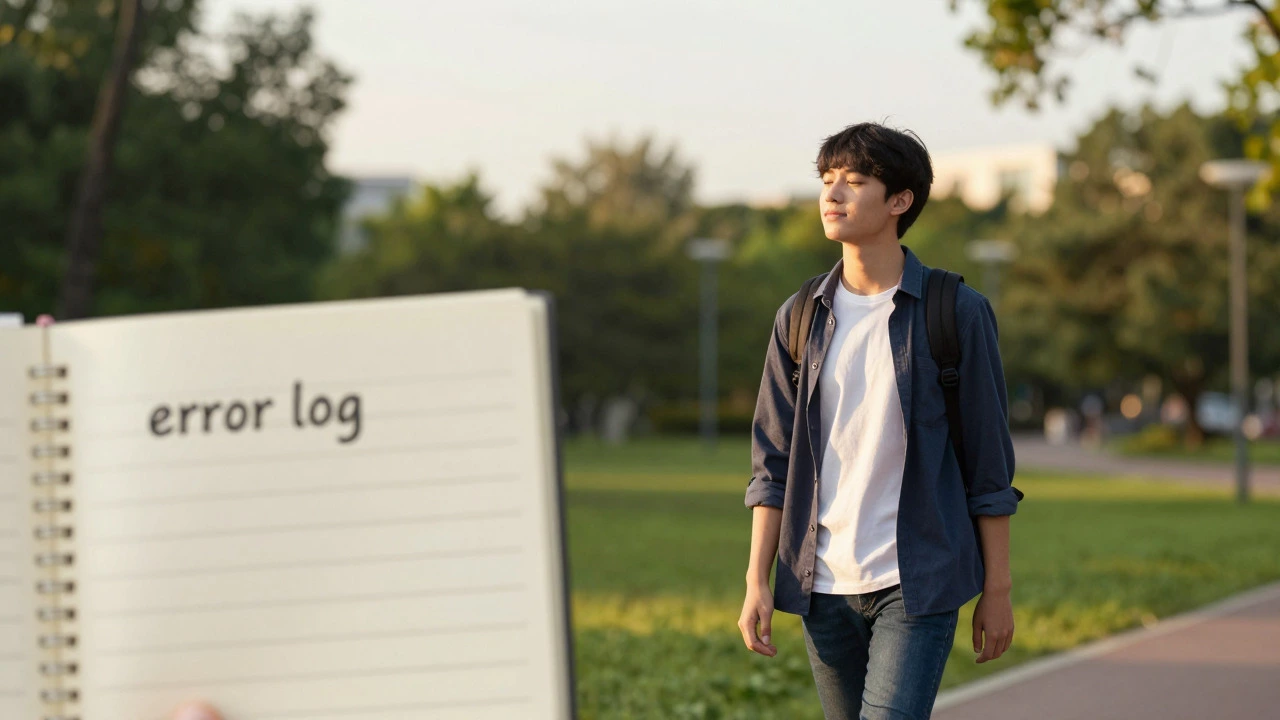
Also, track your mistakes. Maintain an error log. Every time you get a question wrong in a mock test, write down why you got it wrong. Was it a calculation error? A conceptual gap? Or did you misread the question? Reviewing this log weekly prevents repeating the same mistakes in the actual exam.
When Is It Too Late?
It is rarely too late unless you start with zero basics in the last month before the exam. However, starting late changes your strategy. If you begin in January for a January exam, you cannot cover the entire syllabus. You must pick high-weightage chapters and master them completely.
For example, in Chemistry, you can cover almost 50% of the paper by focusing on NCERT textbook content, which is factual and easy to memorize. In Math, coordinate geometry and calculus offer high returns for effort. Accept that you might leave some low-yield topics untouched. Perfection is the enemy of progress when time is short.
Managing Stress and Burnout
Preparation for IIT JEE is a marathon, not a sprint. Mental health is as important as academic performance. Many talented students fail not because they lack intelligence, but because they burn out.
Ensure you sleep 7-8 hours a night. Sleep consolidates memory. Without it, all your late-night studying becomes useless. Include physical activity in your routine. Even a 20-minute walk can reset your mind. Talk to friends and family. Isolation leads to anxiety, and anxiety kills performance.
If you feel stuck, take a day off. One day of rest will not ruin your preparation, but chronic stress will. Listen to your body and mind.
Final Thoughts on Timing
So, how much time is required? If you start in Class 11, give yourself three years of consistent effort. If you are in Class 12 or dropping a year, give yourself 12 months of disciplined, strategic work. There is no shortcut, but there is a smart way. Focus on concepts, practice relentlessly, analyze your mistakes, and stay healthy. The clock is ticking, but you control the pace.
Can I crack IIT JEE in 6 months?
Cracking IIT JEE Advanced in 6 months is extremely difficult unless you already have a strong foundation from Class 11 and 12. However, securing a good rank in JEE Main is possible in 6 months if you focus on high-weightage topics, solve previous years' questions, and take regular mock tests. You must study 10-12 hours daily with high intensity.
Is self-study enough for IIT JEE preparation?
Self-study can be enough if you are highly disciplined, have access to good resources (like NCERT, standard reference books, and online platforms), and can evaluate your progress objectively. However, most students benefit from coaching or mentorship for structured guidance, doubt resolution, and competitive environment. Hybrid models (online courses + self-study) are also effective.
How many hours should I study daily for JEE?
In Class 11 and 12, aim for 6-8 hours of focused study alongside school. During a drop year or final preparation phase, increase this to 10-12 hours. Quality matters more than quantity. Ensure these hours include active problem-solving, revision, and mock tests, not just passive reading.
What is the best book list for IIT JEE?
Start with NCERT textbooks for Chemistry and basic concepts. For Physics, use HC Verma for concepts and DC Pandey for practice. For Mathematics, RD Sharma for basics and Cengage series for advanced problems. For Organic Chemistry, MS Chouhan is highly recommended. Always supplement with previous years' question papers.
Should I take a drop year for IIT JEE?
Taking a drop year is a personal decision. Consider it if you were close to qualifying, had external distractions during Class 12, or want to strengthen weak areas. However, ensure you have the mental resilience to handle the pressure. Statistics show that many successful candidates are droppers, but success depends on improved strategy, not just extra time.