
Government Job Security Risk Evaluator
Determine how "bulletproof" your current position is based on the regulations discussed in the article.
Security Assessment
If you're eyeing a career in the public sector, you need to understand that the rules of the game change. In a private company, "at-will employment" means your boss can let you go because they don't like your attitude or because the company is pivoting. In the government, your employment is usually tied to a set of strict regulations and contractual obligations. This doesn't make you immortal; it just means the exit door is much harder to push open.
The core of the matter: Due Process
To understand why it's harder to get fired, you have to understand Due Process is the legal requirement that the state must respect all legal rights that are owed to a person . In the private sector, your rights are mostly defined by your contract. In a government role, you have what is known as a "property interest" in your job. This means once you pass your probation period, your job is legally yours unless the government can prove a legitimate, documented reason to take it away.
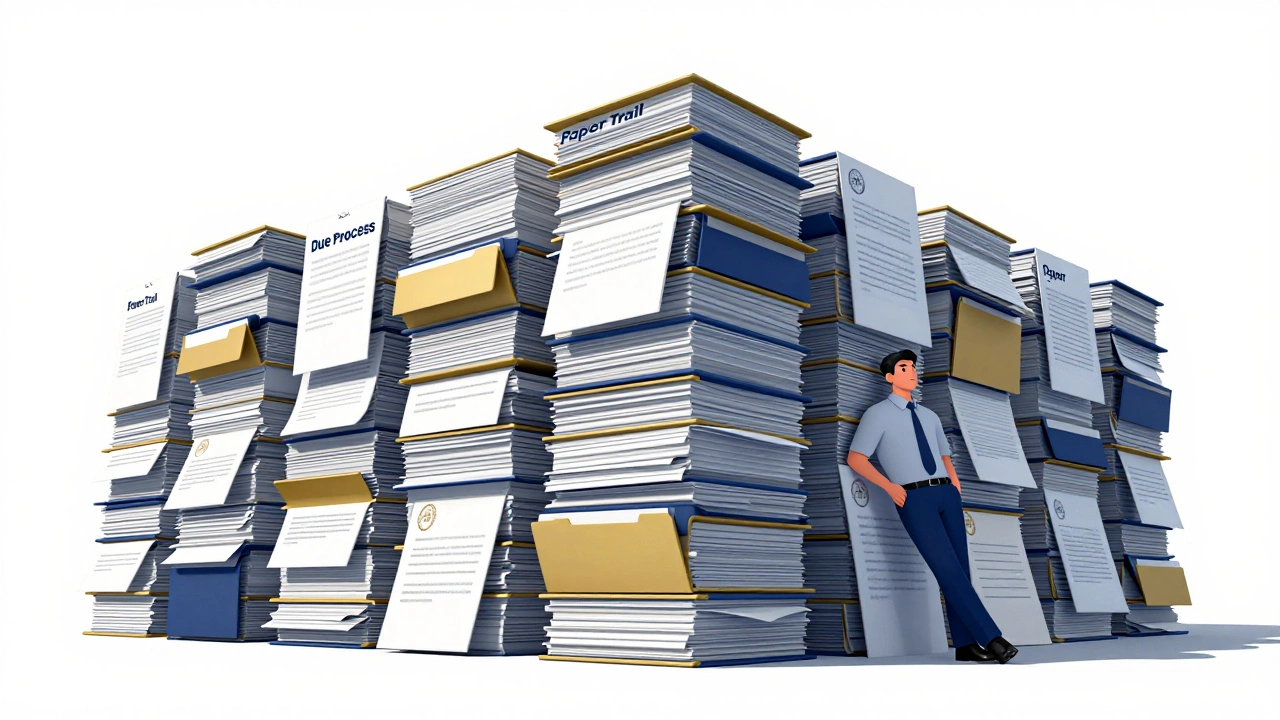
Imagine a scenario where a manager hates an employee's personality. In a startup, that employee might be gone by Friday. In a civil service role, the manager can't just say "you're not a culture fit." They have to prove "just cause." This involves a paper trail that would make a novelist blush. We're talking about written warnings, performance improvement plans (PIPs), and multiple opportunities for the employee to correct their behavior. If the manager skips a single step in the official handbook, a union or a lawyer can get the employee's job reinstated based on a procedural error, even if the employee was actually terrible at their job.
The Probationary Period: Where you are most vulnerable
Before you get that legendary job security, you have to survive the Probationary Period is a trial period at the start of employment where a new employee's performance is evaluated before they are granted permanent status . This is the only time when a government employee is essentially "at-will." Depending on the level of government-federal, state, or local-this period typically lasts anywhere from six months to two years.
During this window, the government doesn't need a mountain of evidence to let you go. If you're consistently late, fail to learn the software, or clash with the team, you can be terminated with very little ceremony. This is why the first year of a government job is often the most stressful. You're essentially auditioning for the right to be nearly impossible to fire. Once you hit that anniversary mark and receive your permanent appointment, the shield goes up.
Reasons that lead to immediate termination
While poor performance takes a long time to process, there are "fast tracks" to getting fired. No amount of due process can save you from Gross Misconduct is a severe violation of workplace rules or laws that justifies immediate dismissal without prior warnings . If you commit a crime, steal government property, or engage in workplace violence, the process moves significantly faster.
| Reason for Termination | Process Speed | Required Evidence | Typical Outcome |
|---|---|---|---|
| Poor Performance | Slow (Months/Years) | PIPs, documented warnings | Demotion or Termination |
| Budget Cuts (RIF) | Moderate | Financial audits, seniority lists | Layoffs (RIF) |
| Gross Misconduct | Fast (Days/Weeks) | Police reports, eyewitnesses | Immediate Dismissal |
| Insubordination | Moderate | Direct order violations | Disciplinary Action |
Another common way people lose government jobs isn't through firing, but through a Reduction in Force (RIF) is a permanent elimination of positions due to lack of funds or reorganization of government agencies . When a government agency loses funding or a specific program is shut down by a new administration, jobs vanish. In these cases, the government uses a "competitive ranking" system. They look at your tenure (how long you've been there) and your veteran status to decide who stays and who goes. It's not about your performance; it's about your slot on the list.
The role of Unions and Collective Bargaining
You can't talk about government job security without mentioning Labor Unions is organized associations of workers formed to protect and further their rights and interests . Most public sector employees are represented by a union. These organizations provide a layer of protection that doesn't exist in most corporate offices. If a manager tries to fire a union member, the employee has the right to "Weingarten Rights," which means they can have a union representative present during any investigatory interview that might lead to discipline.
The union doesn't necessarily stop a bad employee from being fired; it just ensures that the government follows the rules to the letter. If the government fails to provide a written notice or denies the employee a fair hearing, the union will file a grievance. This grievance process can drag on for years, often resulting in the employee being paid their full salary while the case is litigated. This is where the stereotype of the "unfireable employee" comes from-not because they are untouchable, but because the legal battle to remove them is too expensive and time-consuming for the department to handle.
The psychological trade-off: Security vs. Growth
Is this high level of security actually a good thing? It depends on what you want from your career. For someone who values peace of mind and wants to ensure their family is provided for regardless of the economy, the public sector is a dream. You don't have to worry about a sudden quarterly dip in profits leading to a mass layoff.
However, this security comes with a trade-off. In the private sector, high performance is often rewarded with rapid promotions and big raises. In government, the General Schedule (GS) is a standardized pay scale system used by the US federal government to determine salary levels based on grade and step (or a similar local grade system) means that your pay is largely fixed. You can't simply "hustle" your way to a 50% raise. Because it is so hard to fire people, the system is designed to be rigid. Innovation can happen slowly because there's little incentive for employees to take risks or work twice as hard as their peers if the reward is the same.

Common pitfalls to avoid if you want to keep your job
Even with the protections, there are ways you can accidentally paint a target on your back. The biggest mistake new government employees make is assuming that the rules don't apply to them. Because the process of firing is so slow, some people start sliding into a pattern of "quiet quitting." They stop meeting deadlines or ignore emails, thinking they are safe. But remember: a manager who can't fire you today can still spend two years building a perfect legal case to fire you tomorrow.
Avoid these common traps:
- Ignoring the Paper Trail: If you get a "letter of reprimand," don't just throw it in a drawer. That is the first brick in the wall the government is building to justify your termination. Respond in writing, correct the behavior, and document your progress.
- Political Missteps: In many government roles, you serve at the pleasure of an elected official. While civil servants are protected, "political appointees" are not. If the administration changes, those in top-tier leadership often clear out overnight.
- Ethics Violations: Government work has strict rules about conflicts of interest. Accepting a gift from a contractor or using government resources for personal gain is a one-way ticket to a disciplinary hearing.
Final thoughts on the "unfireable" myth
So, is it hard to get fired from a government job? Yes, it is significantly harder than in the private sector. You have a legal right to your position, you have the protection of a union, and you are shielded by a bureaucratic process that favors the employee over the employer. But "hard" does not mean "impossible." If you are truly incompetent or commit a serious offense, you will eventually find yourself out of a job. The difference is that you'll have plenty of time to see it coming and a lot of paperwork to review before it actually happens.
Can I be fired during my probation period?
Yes. During the probationary period, you generally do not have the same "property interest" in your job as permanent employees do. The government can terminate your employment for a much wider range of reasons, often without the need for the extensive documentation required for permanent staff.
What is a Performance Improvement Plan (PIP)?
A PIP is a formal document given to an employee who is not meeting job expectations. It outlines specific areas where the employee is failing, the goals they must reach to improve, and a timeline for review. In government jobs, a PIP is often a mandatory legal step before an employee can be fired for performance issues.
Does being in a union actually stop me from being fired?
A union doesn't provide absolute immunity, but it ensures that the government follows the collective bargaining agreement. If the government fails to follow the correct disciplinary steps, the union can fight to have you reinstated or given a lighter penalty. They provide legal representation and a voice during the process.
What happens during a Reduction in Force (RIF)?
A RIF happens when the government eliminates positions due to budget cuts or restructuring. Unlike being fired for cause, this is not based on performance. Employees are typically ranked by seniority and veteran preference. Those with the least tenure are generally the first to be let go.
Can a new administration fire all the old employees?
Generally, no. Most career civil servants are protected from political purges. However, political appointees-those chosen by the leader of the administration-serve "at will" and can be replaced immediately when a new leader takes office.