
People often ask if the CPA is harder than the MCAT. It’s not a simple yes or no. These two exams are built for totally different careers - one for accountants, one for doctors - and they test completely different skills. But if you’re trying to decide which path to take, or just wondering which one’s tougher, you need to look beyond the word "hard." What matters is what each exam demands: time, mental stamina, content depth, and how much you have to change your life to pass it.
What the CPA Exam Actually Covers
The CPA exam isn’t one test. It’s four separate sections, each lasting four hours: Auditing and Attestation (AUD), Business Environment and Concepts (BEC), Financial Accounting and Reporting (FAR), and Regulation (REG). You have 18 months to pass all four after you get your first passing score. That’s not a lot of time if you’re working full-time.
Each section has multiple-choice questions, task-based simulations (real-world accounting scenarios), and in BEC, written communication tasks. You’re not just memorizing tax codes or GAAP rules - you have to apply them. For example, you might get a simulation where a company’s financial statements have errors, and you need to fix them, explain why they’re wrong, and suggest how to report them correctly. It’s not theory. It’s practice.
The pass rates hover around 50% for each section. That’s not because it’s impossible. It’s because candidates underestimate how much detail they need. A single question on revenue recognition under ASC 606 can trip you up if you haven’t drilled into the five-step model inside and out. You can’t wing it with flashcards. You need to understand the logic behind every rule.
What the MCAT Actually Covers
The MCAT is a 7.5-hour marathon. It’s split into four sections: Biological and Biochemical Foundations of Living Systems, Chemical and Physical Foundations of Biological Systems, Psychological, Social, and Biological Foundations of Behavior, and Critical Analysis and Reasoning Skills (CARS). No calculators. No notes. Just your brain, a pencil, and a scantron.
The science sections aren’t just recall. They test how well you can connect biology to chemistry, physics, and even psychology. For instance, you might get a passage about kidney function and then have to calculate glomerular filtration rate using a formula you’ve never seen before - but you’re expected to derive it from the context. CARS is even worse. It’s 53 questions based on dense, abstract passages from philosophy, ethics, or social science journals. You’re not tested on what you know. You’re tested on how fast you can analyze nonsense and find the right answer.
Pass rates? Around 65% of test-takers score above the median. But that’s misleading. The median score is 500 out of 528. To be competitive for U.S. medical schools, you need 510+. That means you’re competing against people who spent 300+ hours studying, often while holding down a job or doing research. You’re not just studying biology - you’re learning to think like a doctor under pressure.
Time Commitment: CPA vs MCAT
Most people spend 300 to 400 hours preparing for the CPA. If you study 15 hours a week, that’s about 3 months per section. But if you’re working full-time, it can stretch to 12-18 months. You need to carve out time for simulations, practice exams, and reviewing mistakes - not just reading.
The MCAT demands 300 to 350 hours too. But here’s the catch: you usually take it once, in one sitting. That means you have to be at peak performance on a single day. No second chances. No retaking one section. If you freeze during CARS, you lose points across the whole exam. Most pre-med students study full-time for 6-12 months. They drop classes, delay internships, and live in libraries. The pressure is constant.

Pass Rates and Retakes
CPA pass rates per section: 45-55%. You can retake any section as many times as you want. If you fail AUD, you can try again in two months. The exam doesn’t punish you for trying again. You just have to pay again - about $200 per section.
MCAT retakes are limited. You can take it only three times in a single year, four times in two years, and seven times total in your lifetime. If you score poorly, it shows up on your application. Medical schools see every attempt. That changes how you prepare. You can’t afford to guess.
Which One Is Actually Harder?
There’s no universal answer. It depends on your brain.
If you’re great at logic, detail-oriented, and can sit still for hours analyzing spreadsheets, the CPA might feel manageable. But if you struggle with memorizing complex rules - like how to classify leases under ASC 842 - you’ll be in trouble.
If you’re a natural problem-solver who thrives under pressure and can read dense text fast, the MCAT might feel like a puzzle. But if you panic when you see a passage on Kantian ethics or a biochemistry pathway you’ve never seen before, it’ll break you.
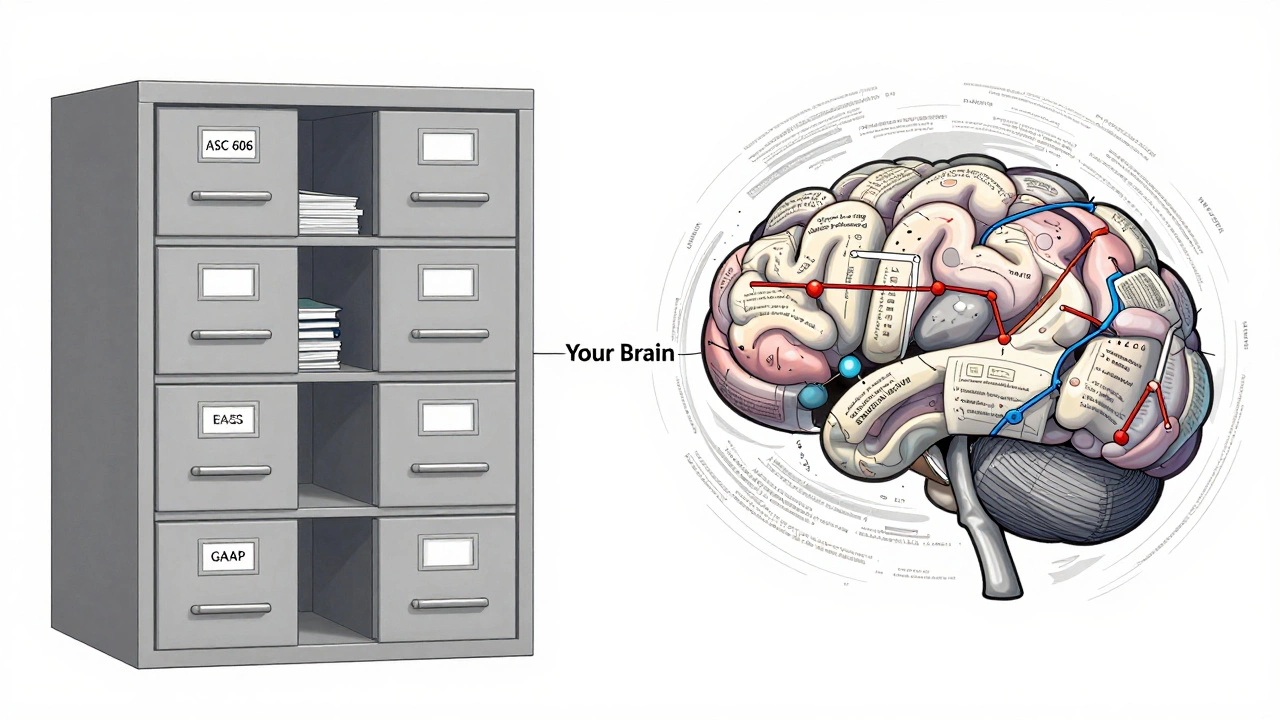
Here’s the real difference: the CPA tests your knowledge of a system. The MCAT tests your ability to learn on the fly.
CPA: You’re expected to know the rules. MCAT: You’re expected to figure them out from scratch.
One exam lets you study in chunks. The other demands endurance. One rewards repetition. The other rewards adaptability.
Who Should Take Which?
If you’re drawn to numbers, compliance, and structured systems - and you want a career with stable demand - CPA is your path. Accountants are needed everywhere: public firms, private companies, nonprofits. You can work remotely. You can switch industries. The credential opens doors.
If you’re obsessed with biology, human behavior, and saving lives - and you’re okay with years of residency and debt - then MCAT is your only way in. Medicine isn’t just a job. It’s a lifestyle. And the MCAT is the first gatekeeper.
Neither is "easier." But one is more predictable. The CPA has a known syllabus. The MCAT doesn’t. You can’t predict what CARS passage you’ll get. You can’t guess which biochemistry concept will be tested. That uncertainty is what makes it feel harder to so many.
Real Stories from People Who Took Both
A friend of mine passed the CPA in 8 months while working as a junior accountant. She studied after work, used a review course, and failed FAR twice before passing. She said: "It was exhausting, but I knew exactly what to study. I just had to keep showing up."
Another friend spent 10 months prepping for the MCAT. He was a biochemistry major. He aced his classes. But on test day, he froze during CARS. Scored 498. Took it again six months later. Scored 512. He said: "The MCAT didn’t test what I knew. It tested whether I could stay calm when everything felt unfamiliar."
That’s the difference.
Bottom Line: It’s Not About Difficulty - It’s About Fit
The CPA is hard because it’s deep. The MCAT is hard because it’s unpredictable. One asks you to master a system. The other asks you to survive chaos.
If you’re choosing between them, don’t ask which is harder. Ask: which one matches how your brain works?
CPA: You can train for it. You can practice the format. You can fail and try again.
MCAT: You have to be ready on day one. No do-overs. No safety net.
Both are brutal. But only one lets you breathe after a bad day.