ICSE Board: What Makes It Tougher Than CBSE and Who It Suits Best
When it comes to school boards in India, the ICSE board, the Indian Certificate of Secondary Education, a national-level board known for its detailed curriculum and focus on language and analytical skills. Also known as Council for the Indian School Certificate Examinations, it stands apart from CBSE by demanding more writing, critical thinking, and consistent effort across subjects—not just memorization. Unlike CBSE, which often rewards speed and pattern-based answers, ICSE expects students to explain concepts clearly, use proper grammar, and connect ideas across disciplines. That’s why many parents and teachers call it the most demanding board for Class 10.
One key difference is the ICSE syllabus, a broad, literature-heavy curriculum that includes English as a core subject with heavy emphasis on comprehension, grammar, and creative writing. Science and math aren’t simplified—they’re taught with real-world context, requiring students to understand why formulas work, not just how to apply them. Meanwhile, CBSE, the Central Board of Secondary Education, focuses on standardized testing, NCERT alignment, and exam-oriented preparation. If your child learns best by doing practice papers and recalling facts quickly, CBSE might feel easier. But if they thrive when asked to analyze, compare, and write in depth, ICSE builds skills that last beyond exams.
It’s not about which board is "better"—it’s about which one matches your child’s learning style. ICSE students often end up stronger in English, research, and presentation skills, which helps in international curricula and competitive exams like SAT or IELTS. But it also means more hours of reading, writing, and revising. There’s no shortcut. You can’t cram the ICSE English paper like you might with a CBSE science MCQ. You have to know the text, the author’s intent, and how to structure a thoughtful answer. That’s why many top schools in India, especially in cities like Mumbai, Kolkata, and Pune, prefer ICSE. And it’s why parents who want their kids to think, not just recall, choose it—even when the workload is heavy.
What you’ll find below are real insights from parents, students, and educators who’ve lived through the ICSE experience. From how to handle the English paper without stress, to why ICSE students often outperform CBSE peers in college, to the hidden trade-offs no one talks about—this collection cuts through the noise. No fluff. Just what actually matters when you’re choosing a board for your child—or when you’re trying to survive it yourself.
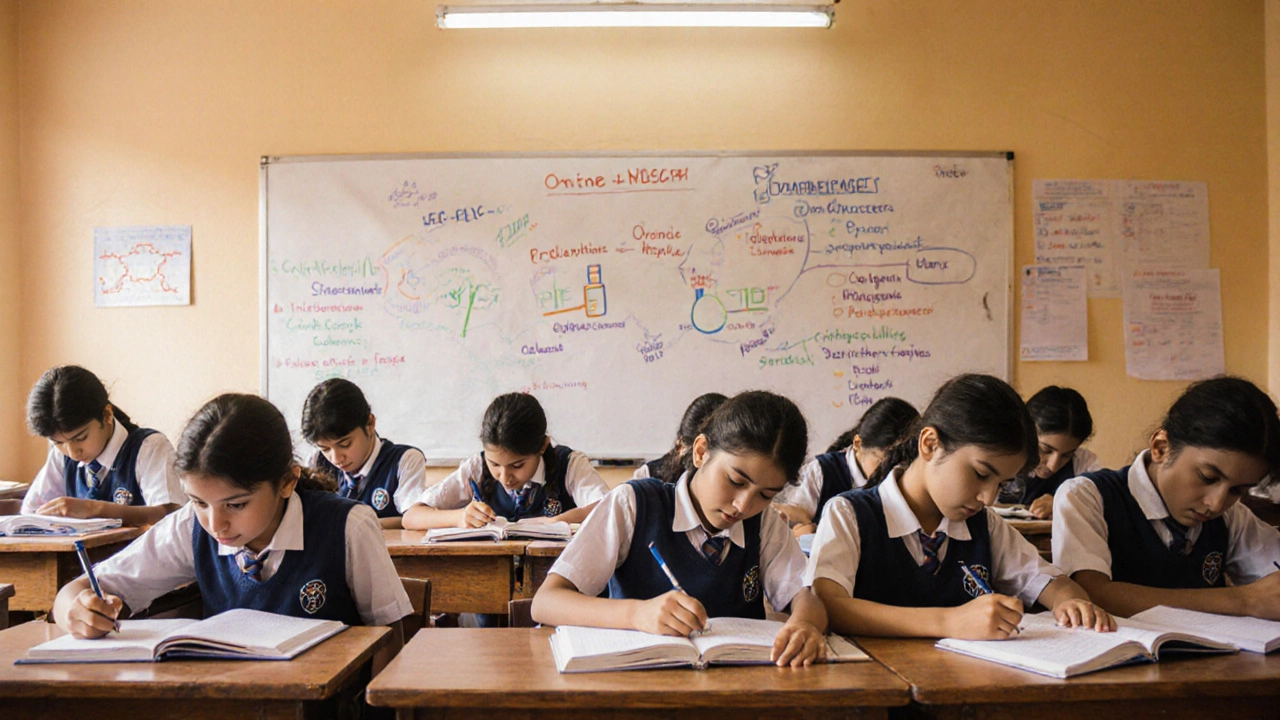
Which Board Has the Highest Value in India for School Education?
Nov 18, 2025 / 0 Comments
CBSE is the most valuable board in India for students aiming for engineering, medicine, or government jobs due to its alignment with JEE, NEET, and national university admissions. Other boards like ICSE and state boards have strengths but offer fewer national opportunities.
READ MORERECENT POSTS
- What's the hardest license to get? Top 5 most difficult professional exams in the world
- Best Programming Language for Beginners - Which Code Should You Learn First?
- Is an MBA Harder Than a Masters? What Sets Them Apart
- Easiest Courses to Get: Exploring Low-Pressure Study Options
- Which Board Has the Highest Value in India for School Education?