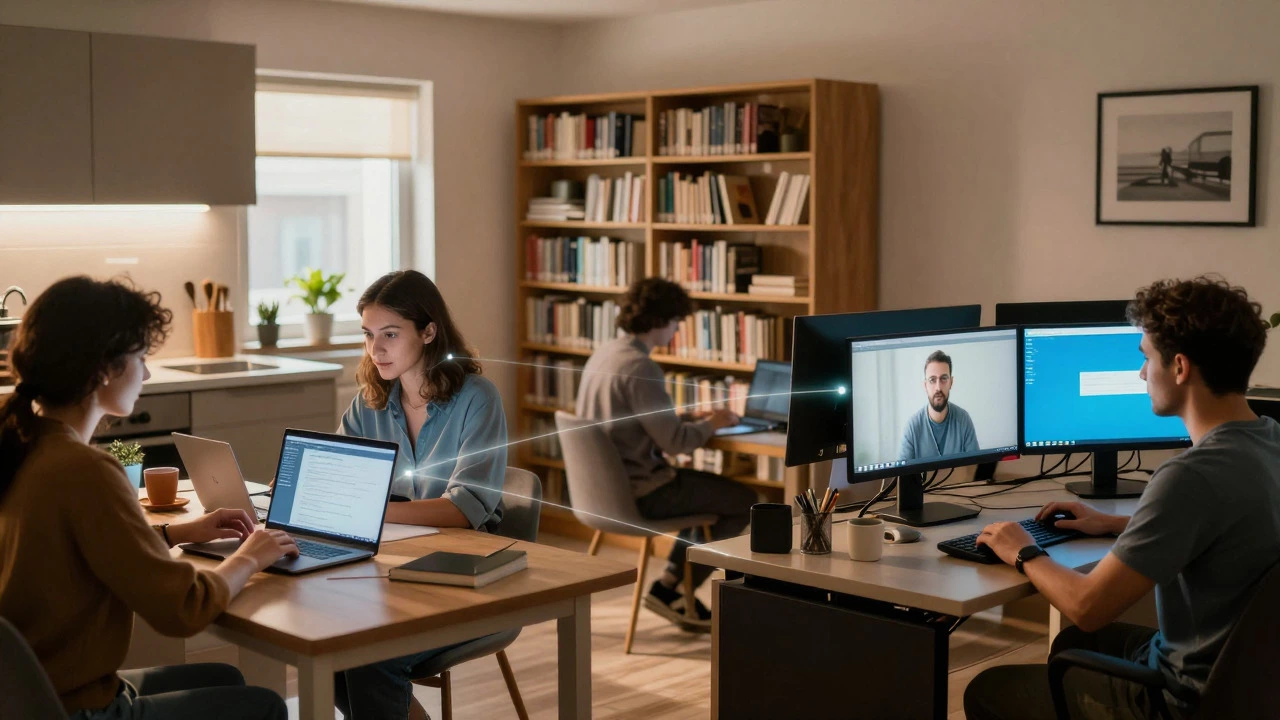
Distance Education Compatibility Checker
Answer five quick questions to discover which learning model — traditional, distance, or self-study — best matches your goals and lifestyle.
Imagine finishing a master's degree while working full-time, without ever setting foot in a lecture hall. That’s the reality for millions of students today. But what exactly counts as distance education? Is it just watching YouTube videos? Does it require a computer? And how is it different from simply buying a textbook?
Distance education is more than just "learning from home." It is a formalized system where instruction is delivered to learners who are physically separated from the instructor. The core promise is flexibility: you learn on your own schedule, in your own space, but under structured academic standards. Whether you are a busy parent, a professional upskilling, or a student in a remote area, this mode of study offers a viable path to qualification.
The Core Definition and Legal Framework
To understand distance education, we have to look at how educational bodies define it. In many jurisdictions, including Australia and the United States, distance education refers to any program where the majority of instruction occurs remotely. This isn't just about geography; it's about the delivery mechanism.
Distance Education is a method of delivering curriculum content to learners who are not co-located with the instructor, utilizing technology or postal services to bridge the physical gap. It includes synchronous activities (live classes) and asynchronous ones (recorded lectures, reading assignments). The key attribute here is that the learner has significant control over when they engage with the material, unlike traditional classroom settings where attendance is mandatory at specific times.
This definition distinguishes it from self-study. Self-study lacks institutional oversight. Distance education involves accredited institutions, graded assessments, and often some form of interaction with faculty or peers. For example, the Open University in the UK pioneered this model in 1969, proving that rigorous academic standards could be maintained without daily campus presence.
Types of Distance Learning Models
Not all distance education looks the same. The landscape has evolved significantly since the days of correspondence courses sent via mail. Today, three primary models dominate the market, each serving different needs and technological capabilities.
- Asynchronous Online Learning: This is the most common form. You access materials (videos, PDFs, forums) whenever you want. There is no fixed meeting time. Think of platforms like Coursera or university LMS portals like Blackboard or Canvas. You watch a lecture on Tuesday night, complete a quiz on Thursday morning, and post to a discussion board on Saturday. The flexibility is high, but so is the need for self-discipline.
- Synchronous Online Learning: Here, you log in at a specific time for live video conferences. Tools like Zoom or Microsoft Teams are standard. The instructor presents in real-time, and you can ask questions instantly. This mimics the classroom experience closely and is great for interactive subjects like language learning or coding workshops. However, it requires reliable internet and fixed scheduling.
- Hybrid (Blended) Learning: This combines both. You might do weekly online readings and quizzes, then attend a two-day intensive workshop on campus once a semester. Many professional certifications use this model to balance theory with practical application.
Each model has trade-offs. Asynchronous offers maximum flexibility but can feel isolating. Synchronous provides structure and community but demands your time at specific moments. Hybrid tries to strike a balance, though it may still require travel.
How It Differs from Traditional and Self-Study
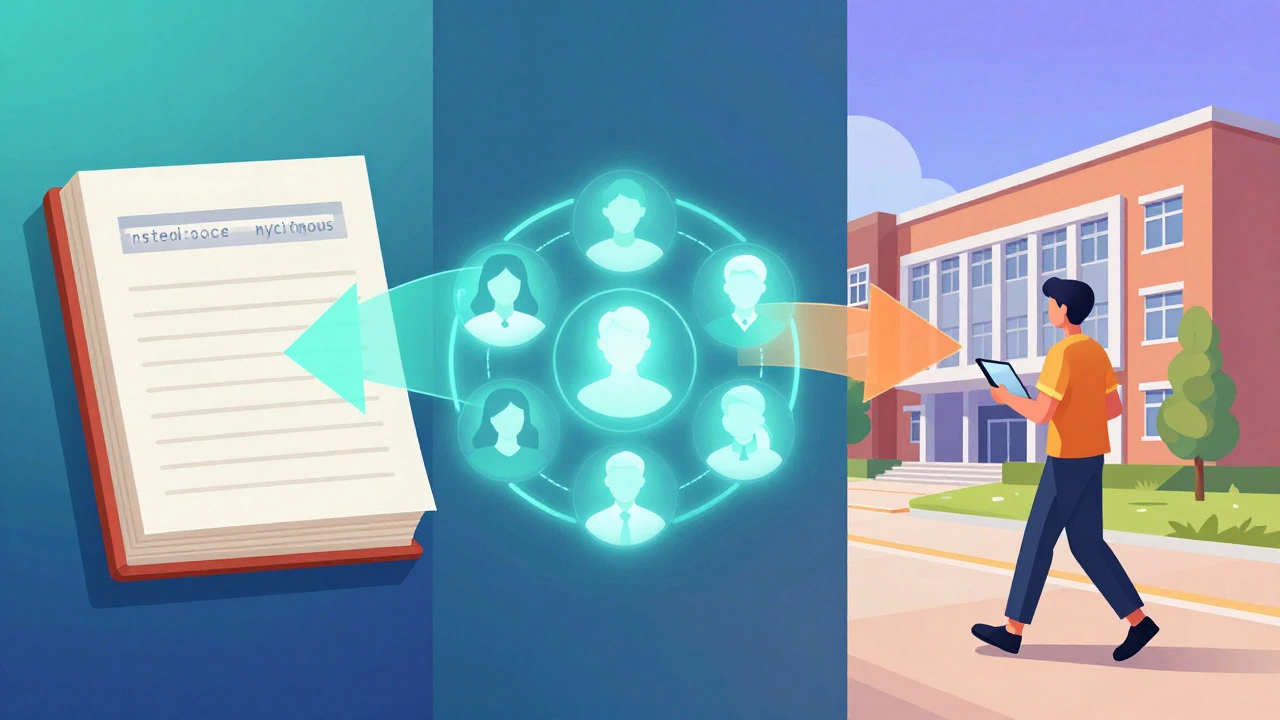
A common confusion is between distance education, traditional schooling, and pure self-study. Understanding these distinctions helps you choose the right path.
| Feature | Traditional Classroom | Distance Education | Self-Study |
|---|---|---|---|
| Location | Fixed campus | Remote/Flexible | Anywhere |
| Schedule | Fixed timetables | Flexible or Scheduled Live | Completely self-directed |
| Instructor Interaction | Daily face-to-face | Digital/Mediated | None (or peer-based) |
| Credibility/Certification | High (Accredited) | High (if Accredited) | Low (No official credential) |
| Cost Structure | Tuition + Commute/Housing | Tuition + Tech Fees | Material Costs Only |
The critical difference between distance education and self-study is accountability. In distance education, an institution tracks your progress, grades your work, and issues a certificate. In self-study, if you stop, nothing happens. There is no external validation unless you take a separate exam later.
Technology and Infrastructure Requirements
You don’t need a supercomputer to succeed in distance education, but you do need reliable infrastructure. The digital divide remains a real barrier for some learners, particularly in rural areas or developing regions.
- Internet Connectivity: For synchronous classes, you need stable broadband. A minimum of 5 Mbps download speed is recommended for HD video streaming. If you’re only doing asynchronous work, basic connectivity suffices.
- Hardware: A laptop or desktop is ideal. Tablets work for reading and light tasks, but typing long essays or coding projects is difficult on small screens. Smartphones are sufficient for checking emails and accessing mobile-friendly platforms, but not for heavy academic work.
- Software: Most institutions use a Learning Management System (LMS). Common platforms include Moodle, Canvas, and Blackboard. Familiarity with these interfaces saves time. You also need standard office software (Word, Excel) and sometimes specialized tools depending on your major (e.g., SPSS for statistics, AutoCAD for engineering).
Pro tip: Before enrolling, check the technical requirements page of the specific course. Some programs require webcams for proctored exams, which adds a hardware cost.
Benefits and Challenges for Students
Why do people choose distance education? The benefits are clear, but the challenges are equally real. Being honest about both helps set realistic expectations.
The Benefits:
- Flexibility: Study around your job, family, or health constraints. You can pause and resume learning without dropping out entirely.
- Accessibility: Access top-tier universities regardless of where you live. A student in Sydney can take a course from a university in London or New York.
- Cost Savings: No commuting costs, no housing fees near campus, and often lower tuition rates compared to on-campus equivalents.
- Pace Control: In asynchronous programs, you can speed through easy topics and slow down for complex ones.
The Challenges:
- Self-Discipline: Without a teacher hovering over your shoulder, procrastination is the biggest enemy. You must create your own routine.
- Isolation: Missing out on social interactions can lead to feelings of loneliness. Intentional networking and forum participation help mitigate this.
- Technical Issues: Internet outages or software glitches can disrupt deadlines. Always build buffer time into your schedule.
- Perception Bias: Some employers still view online degrees skeptically, though this is rapidly changing as more professionals hold them.

Accreditation and Credibility Checks
Before you spend money, verify the source. Not all "online colleges" are created equal. Accreditation is the gold standard for quality assurance.
In the US, look for accreditation by agencies recognized by the U.S. Department of Education or the Council for Higher Education Accreditation (CHEA). In Australia, check if the provider is listed on the Tertiary Education Quality and Standards Agency (TEQSA) register. Internationally, look for members of organizations like the International Association for Continuing Education and Training (IACET).
Accreditation ensures that:
- The curriculum meets industry standards.
- Faculty qualifications are verified.
- Credits are transferable to other institutions.
- The degree is recognized by employers.
If a school claims to be "accredited" but doesn’t specify by whom, dig deeper. Avoid diploma mills that sell credentials for little effort. These lack regulatory oversight and carry little weight in the job market.
Who Is Distance Education Best For?
Distance education isn't for everyone. It thrives with specific types of learners. If you fit one of these profiles, you’ll likely succeed:
- Working Professionals: Those who cannot afford to leave their jobs for further education.
- Parents and Caregivers: Individuals who need to manage household responsibilities alongside studying.
- Geographically Remote Learners: People living far from major educational hubs.
- Lifelong Learners: Individuals pursuing personal interests rather than career advancement.
- Students with Disabilities: Those who find traditional campuses inaccessible due to mobility or sensory issues.
However, if you thrive on immediate feedback, prefer hands-on lab work, or struggle with self-motivation, a traditional or hybrid model might serve you better. Or, consider starting with a short online course to test your compatibility with the format before committing to a full degree.
Frequently Asked Questions
Is distance education the same as online learning?
They are often used interchangeably, but there is a nuance. Distance education is the broader category that includes any learning where student and teacher are apart. This can include correspondence courses (mail-based) and online learning. Online learning specifically refers to digital delivery via the internet. So, all online learning is distance education, but not all distance education is online.
Do distance education degrees have the same value as on-campus degrees?
Yes, provided the institution is accredited. Major employers and graduate schools treat accredited online degrees equivalently to on-campus ones. The transcript usually indicates the mode of delivery, but the grade and credit hours remain the same. The stigma associated with online learning has largely faded in professional fields like business, IT, and healthcare.
What are the main disadvantages of distance education?
The primary disadvantage is the requirement for high self-discipline. Without the structure of a physical classroom, it is easy to fall behind. Other downsides include potential feelings of isolation, reliance on technology (which can fail), and limited opportunities for spontaneous networking compared to in-person environments.
Can I get financial aid for distance education?
In many countries, yes. In the US, federal student aid is available for eligible online programs at accredited institutions. In Australia, HECS-HELP loans apply to approved online courses at public universities. Private scholarships and employer tuition reimbursement programs also frequently cover online studies. Always check the specific eligibility criteria for your region.
How long does it take to complete a distance education degree?
It varies widely based on the program structure and your pace. A standard four-year bachelor's degree might take 4-6 years if studied part-time. Accelerated online programs can compress this to 2-3 years. Master's programs typically range from 1 to 3 years. Asynchronous courses allow you to go faster or slower, while synchronous programs follow a fixed calendar similar to traditional terms.