Free college courses sound too good to be true. You sign up, watch lectures, do assignments, and walk away with knowledge-no tuition, no debt. But are they really worth your time? Or are they just digital fluff with no real value?
The answer isn’t yes or no. It depends on what you’re trying to achieve.
What free college courses actually offer
Platforms like Coursera, edX, and MIT OpenCourseWare let you take real university classes for free. You get access to the same syllabi, readings, and video lectures as enrolled students. Some even offer graded assignments and discussion forums. But here’s the catch: you don’t get a degree. You don’t get official transcripts. And unless you pay for a certificate, you won’t get proof you finished.
That doesn’t mean they’re useless. In 2024, LinkedIn data showed that learners who completed free courses in data analysis, project management, and digital marketing were 27% more likely to get called for interviews than those who didn’t. Why? Because hiring managers see initiative. They notice when someone takes the time to learn outside of work or school.
Free courses work best when you treat them like real classes. Set a schedule. Do the readings. Submit the assignments-even if no one grades them. Treat the final project like it’s for a job application. That’s how you turn passive watching into active learning.
Who gets the most out of free courses
Not everyone benefits the same way. There are three types of people who get real value from free college courses:
- Students exploring majors - If you’re unsure whether to study computer science or psychology, take a free intro course from Stanford or Yale. It’s cheaper than dropping a semester.
- Professionals upskilling - A nurse wanting to move into health informatics can take free courses in SQL and data visualization. No employer requires a certificate, but they’ll notice the skills on your resume.
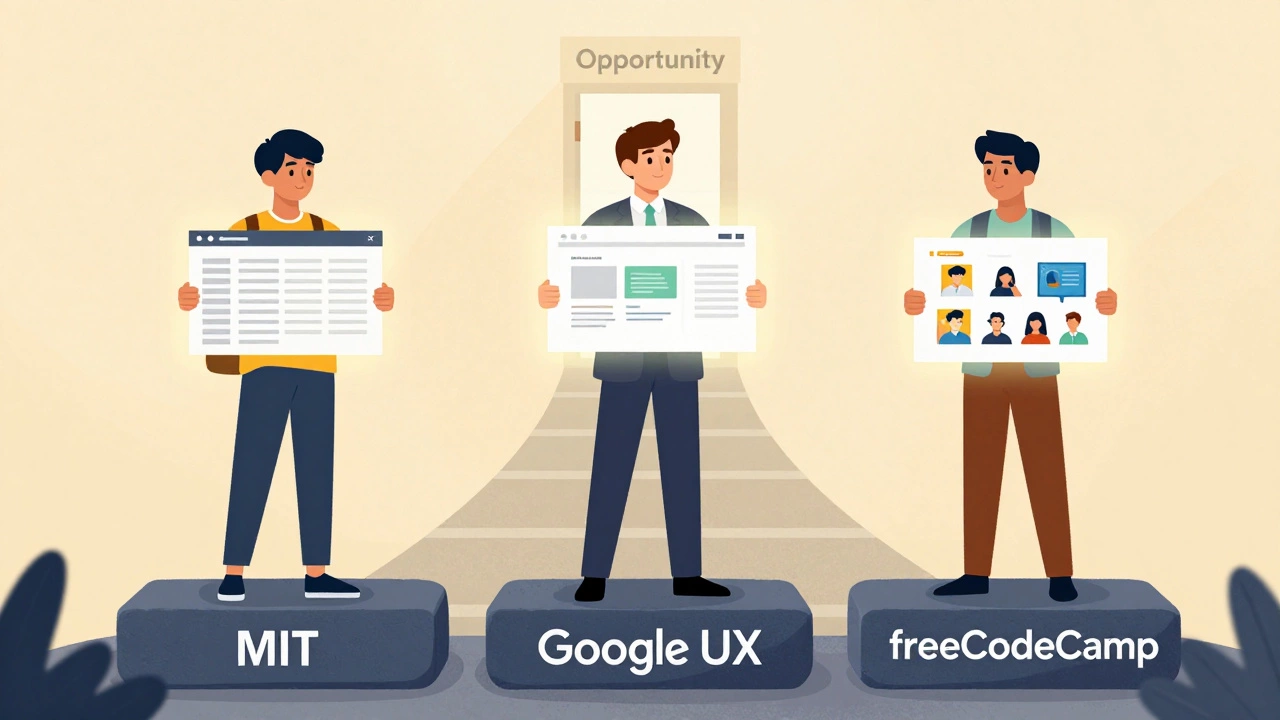
- Self-learners building portfolios - A graphic designer who completes free UI/UX courses from Google and builds three real projects can land freelance gigs without a degree.
People who expect free courses to replace a degree usually get disappointed. But people who use them as stepping stones? They often end up ahead.
The certificate myth
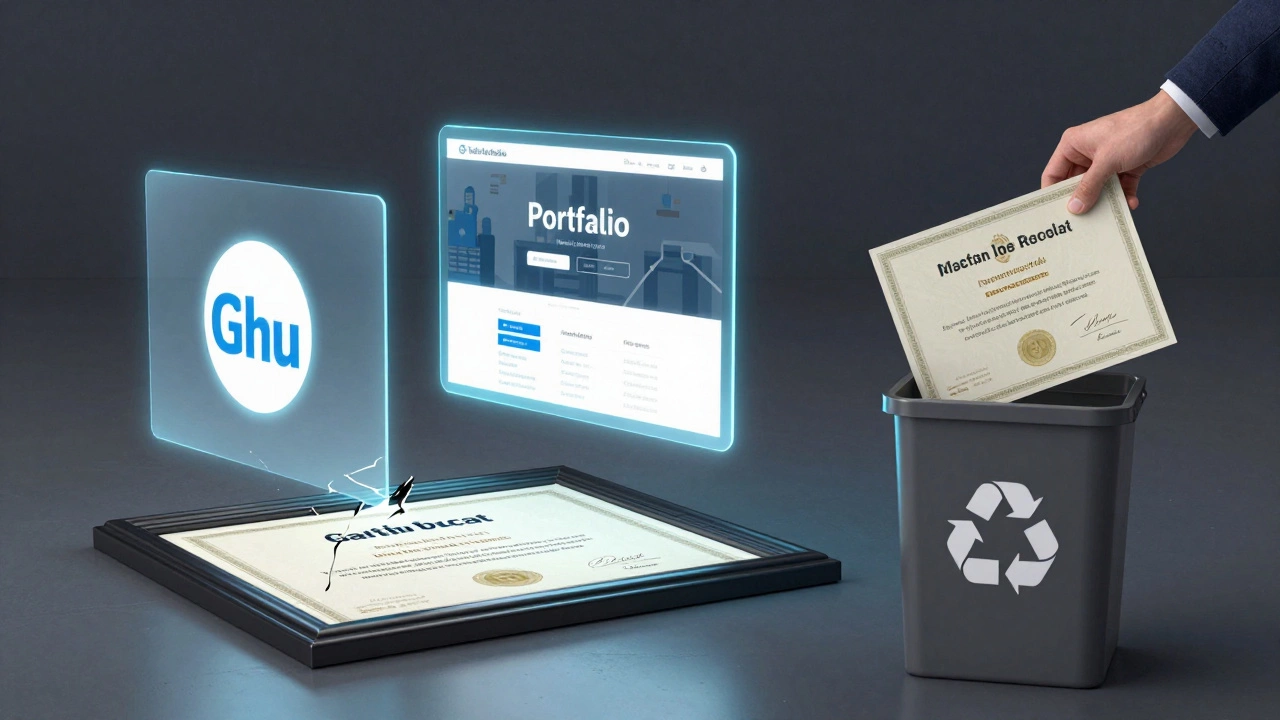
Most free courses offer a paid certificate-usually $50 to $100. Some people think buying it makes the course “worth it.” But here’s the truth: employers rarely care about the certificate itself.
What they care about is what you can do. If you completed a free Python course and built a tool that automates your team’s weekly reports, that’s worth more than any certificate. If you took a free course on financial modeling and created a spreadsheet that saved your startup $20,000 a year, you don’t need a badge-you need a promotion.
That’s why the best strategy isn’t to buy certificates. It’s to build something. A GitHub repo. A blog. A portfolio website. A case study. That’s the proof that turns learning into credibility.
Can you earn college credit?
Yes-but only in rare cases.
Some institutions, like Thomas Edison State University and Excelsior College, accept credits from free MOOCs (Massive Open Online Courses) if they’re accredited by the American Council on Education (ACE). For example, a free course from edX on Introduction to Psychology might be worth 3 college credits if approved. But you have to pay a fee to transfer it-usually $100 to $200 per credit.
It’s not a shortcut to a free degree. But it’s a way to reduce costs if you’re already planning to enroll in an accredited program. If you’re aiming for a bachelor’s in business, taking free courses in accounting or statistics could shave off a semester or two.
Check ACE’s credit recommendation service before investing time. Not every free course qualifies. And even if it does, your target school might not accept it.
What free courses can’t do
Free courses won’t give you:
- Personalized feedback from professors
- Networking with classmates or alumni
- Access to campus resources like labs, libraries, or career fairs
- Official transcripts for job applications that require degrees
If you’re applying to a job that says “Bachelor’s required,” a free course won’t change that. Same for grad school applications. You still need the diploma.
But if you’re applying to a startup, a remote role, or a position where skills matter more than credentials? Free courses can be your secret weapon.
How to pick the right free course
Not all free courses are equal. Here’s how to pick ones that actually move the needle:
- Check the provider - Courses from MIT, Harvard, Stanford, or UC Berkeley carry more weight than random YouTube playlists.
- Look for projects - The best courses end with a hands-on assignment. Avoid those that only have multiple-choice quizzes.
- Read reviews - Look for comments like “I used this to switch careers” or “This helped me land my first job.”
- Match it to your goal - Don’t take a free course on quantum physics if you want to learn web design.
- Time commitment matters - A 4-week course that takes 5 hours a week is better than a 12-week course that’s vague and poorly structured.
For example, if you want to break into tech, start with:
- Google’s IT Support Professional Certificate on Coursera (free to audit)
- Harvard’s CS50: Introduction to Computer Science on edX
- Stanford’s How to Learn to Code (free on YouTube)
These aren’t just lectures. They’re structured paths with real projects.
Real stories: What free courses actually led to
Marisol, 28, worked in retail in Texas. She took a free course on data analysis from IBM on Coursera. She built a dashboard tracking her store’s sales trends. She showed it to her manager. Two months later, she was promoted to inventory analyst.
Raj, 34, was a teacher in India. He took free courses on instructional design from MIT OpenCourseWare. He redesigned his classroom materials. His students’ test scores jumped 22%. He got invited to speak at an education conference.
Emma, 22, dropped out of community college. She took free courses in web development from freeCodeCamp. She built a website for a local bakery. They paid her $1,500 to fix it. She’s now freelancing full-time.
These aren’t outliers. They’re people who treated free learning like a job.
Is it worth it? The bottom line
Free college courses are worth it if you’re willing to do the work.
They’re not magic. They won’t hand you a degree or a job. But they’re the cheapest, most accessible way to build real skills, prove initiative, and open doors that were closed before.
If you’re looking to switch careers, climb the ladder, or just learn something new-start with one course. Pick one that matches your goal. Do the work. Build something. Share it. That’s how you turn free learning into real opportunity.
Don’t ask if it’s worth it. Ask: What will you build with it?
Do employers take free college courses seriously?
Yes-if you can show what you did with what you learned. Employers care less about the course and more about your project, portfolio, or results. A free course on Excel that led to a 30% efficiency gain in your team’s workflow means more than any certificate.
Can I get a job with only free courses?
Yes, especially in tech, design, writing, and digital marketing. Many remote and freelance roles prioritize skills over degrees. Build a strong portfolio, contribute to open-source projects, and network on LinkedIn. People hire you for what you can do-not what’s on your diploma.
Are free courses as good as paid ones?
The content is often identical. Paid versions usually add graded assignments, instructor feedback, or a certificate. But if you’re self-motivated, the free version gives you the same knowledge. The difference isn’t in the material-it’s in the support and proof.
How long should I spend on a free course?
It depends on your goal. For skill-building, aim for 5-10 hours per week over 4-8 weeks. That’s enough to finish a course and build something real. Don’t rush. Spreading it out helps retention. Consistency beats intensity.
What if I don’t finish a free course?
That’s okay-but only if you learned something. Many people start courses and drop off. The key isn’t completion-it’s progress. Even if you only finish half, if you walked away with one new skill or idea, it wasn’t wasted. Use what you learned. Apply it. That’s where the value lives.
If you’re thinking about starting a free course, don’t wait for perfect conditions. Just pick one and begin. The hardest part isn’t the learning-it’s starting.