CBSE Global Reach & Recognition Checker
Find out how CBSE qualifications are perceived in your target country and get personalized advice based on your career goals.
Your Profile
Select your options and click "Check" to see how CBSE fits into your plans.
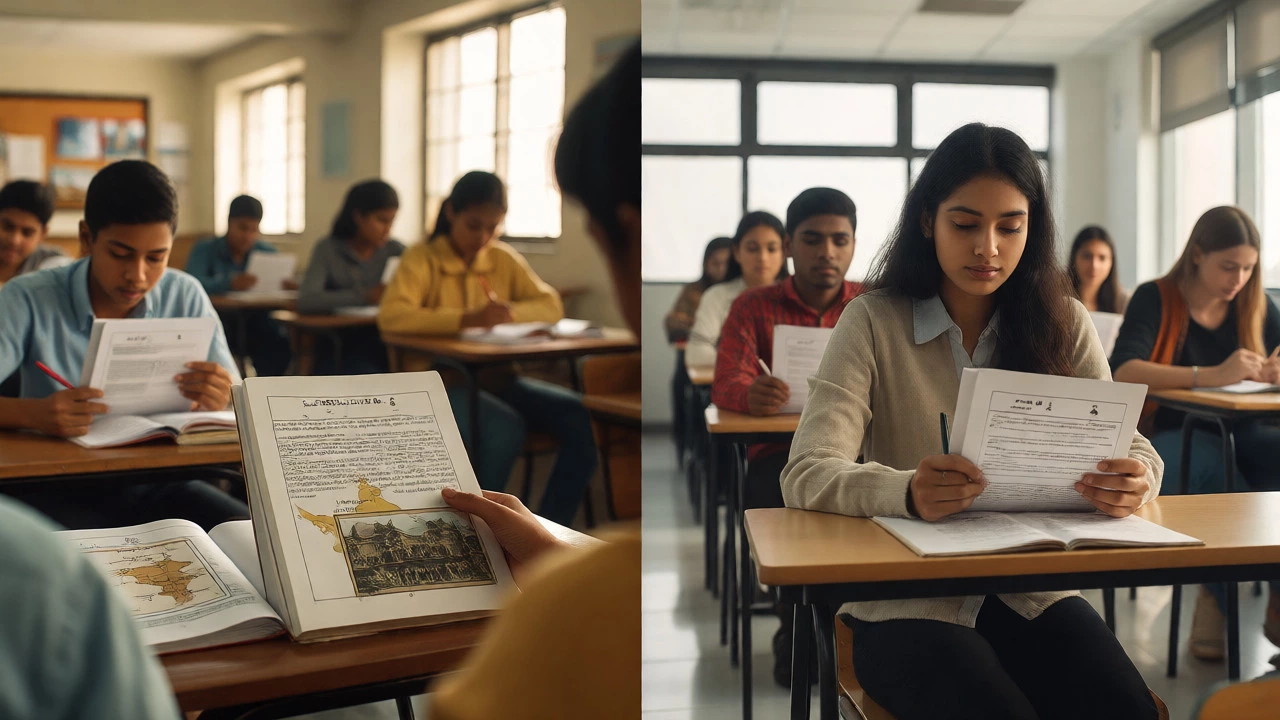
You are sitting in a classroom in Dubai, studying for your Class 10 exams. The paper is exactly the same as the one being printed in New Delhi right now. You pass with flying colors. Now, you want to apply to a university in London or Toronto. Does that mark sheet hold weight there? Or is it just a local ticket?
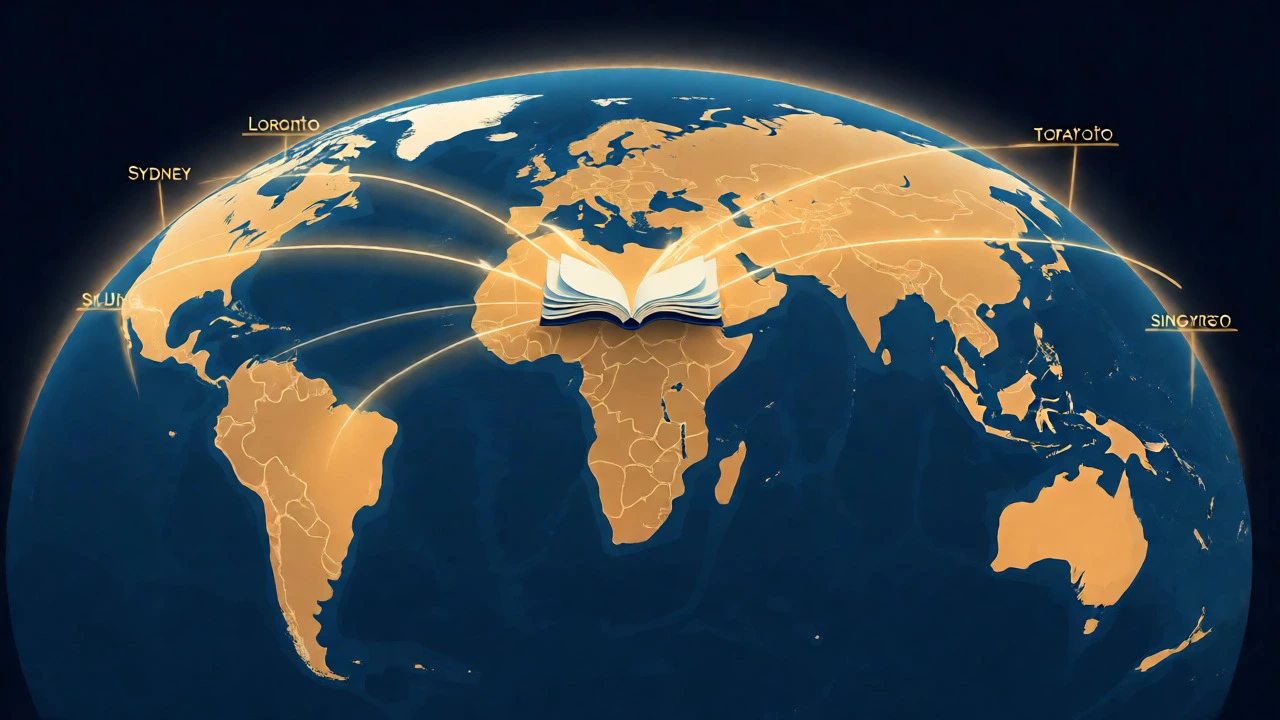
This is the confusion many parents and students face. CBSE (Central Board of Secondary Education) is often labeled as an "Indian" board. But its reach extends far beyond India's borders. It operates schools in over 28 countries. So, is it truly domestic, or has it gone global? The answer isn't black and white. It depends on where you look: the curriculum's origin, the board's administration, or the acceptance of its qualifications.
The Core Identity: An Indian National Board
Let’s clear the biggest misconception first. CBSE is not an international organization like the IB (International Baccalaureate) or Cambridge Assessment. It is a national board. Its headquarters are in New Delhi. It functions under the Ministry of Education, Government of India.
Why does this matter? Because the core philosophy is rooted in Indian educational standards. The curriculum aligns with the National Education Policy (NEP) of India. When you study History, you learn about the Mughal Empire and the Indian Independence Movement. When you study Civics, you learn about the Indian Constitution. This is inherently local content wrapped in a standardized format.
However, calling it "just Indian" ignores its massive export model. CBSE runs thousands of affiliated schools outside India. These schools follow the exact same syllabus, textbooks, and exam schedules as schools in Mumbai or Kolkata. This creates a unique hybrid identity: an Indian administrative body delivering a standardized product globally.
Curriculum Origin: NCERT vs. International Standards
To understand if CBSE is international, look at the source code of its education. CBSE doesn't write most of its own textbooks. It relies heavily on NCERT (National Council of Educational Research and Training) publications. NCERT books are written by Indian educators for Indian contexts.
Compare this to the IGCSE or IB curricula. Those frameworks are designed from day one to be culturally neutral. They avoid specific national histories unless relevant to global events. CBSE, conversely, assumes an Indian cultural baseline. A student in Singapore studying CBSE will still read stories set in rural Rajasthan. Is that "international"? In terms of content diversity, no. In terms of accessibility, yes.
Yet, science and math are universal languages. CBSE’s approach to Physics, Chemistry, and Mathematics is rigorous and comparable to international standards. Many top universities accept CBSE scores because the depth of knowledge matches what they expect from high-performing students worldwide. The context might be Indian, but the logic is global.
Global Recognition: Where Do CBSE Marks Count?
If you take a CBSE Class 12 certificate, can you use it abroad? Yes, but with caveats. Most major countries recognize CBSE as equivalent to their higher secondary certificates. For example, in Australia, CBSE Class 12 is generally accepted for entry into undergraduate degrees, provided the student meets specific subject prerequisites.
Here is how recognition breaks down by region:
- USA & Canada: Widely accepted. Universities often require a credential evaluation service (like WES) to convert CBSE percentages into GPA scales. Top-tier Ivy League schools value the rigor of CBSE Science streams highly.
- UK & Europe: Accepted, but competitive. UK universities often look at Class 12 marks specifically for subjects relevant to the chosen degree. CBSE is seen as a solid academic foundation.
- Middle East & Southeast Asia: High acceptance rate. Since many CBSE schools operate here, local employers and universities are familiar with the grading system. No extra translation or evaluation is usually needed.
- Australia & New Zealand: Recognized by state education authorities. The Australian Education International (AEI) provides guidelines for assessing overseas qualifications, and CBSE fits well within these frameworks.
The catch? It is not always automatic. Unlike the IB Diploma, which has a unified global reputation, CBSE perception varies. Some admissions officers know it well; others have never heard of it. You might need to provide additional context or entrance test scores (like SATs or IELTS) to bridge the gap.
| Feature | CBSE | IB / IGCSE |
|---|---|---|
| Origin | India (Government-run) | Switzerland / UK (Private/Non-profit) |
| Cost | Low (Affordable fees) | High (Premium pricing) |
| Content Focus | National history/culture + STEM | Globally neutral + Critical thinking |
| Exam Style | Board exams + Internal assessment | Continuous assessment + Final exams |
| Global Mobility | Good, requires evaluation in some cases | Excellent, universally understood |
The "International" Schools Paradox
You will see signs saying "CBSE International School" in cities like Riyadh, Jakarta, or Doha. What makes them "international" if the board is Indian? It’s mostly marketing and infrastructure. These schools often charge higher fees than local Indian CBSE schools. They offer better facilities, more extracurricular activities, and sometimes English-medium immersion from age three.
But academically? They are identical. The teacher follows the same lesson plan. The principal answers to the same affiliation rules. The only difference is the demographic mix. In a CBSE school in Kerala, 99% of students are Indian. In a CBSE school in Kuwait, you might find Indians, Nepalis, Sri Lankans, and even some Arab expatriates. This diversity adds an "international flavor" to the social environment, not the academic one.
Parents often confuse the label "International" with the curriculum type. Just because a school calls itself "International CBSE" doesn’t mean it teaches the IB curriculum. Always check the syllabus documents. If it mentions NCERT chapters, it’s CBSE. If it mentions TOK (Theory of Knowledge) or CAS (Creativity, Activity, Service), it’s IB.
University Admissions: The Real Test
Does the "Indian" tag hurt your chances abroad? Surprisingly, no. In fact, for STEM fields, CBSE is often respected for its difficulty level. The JEE (Joint Entrance Examination) preparation culture spills over into regular CBSE studies. Students who survive CBSE Math and Physics are often seen as technically strong.
Consider a student applying to MIT or Stanford. They submit their CBSE Class 12 results. The admissions officer sees a 95% aggregate. They don’t think, "Oh, that’s just an Indian score." They think, "This student mastered complex calculus and organic chemistry." The origin matters less than the achievement.
However, for Humanities or Arts, the story differs. A CBSE essay on "Democracy in India" might not resonate as strongly with a professor in Paris as an IB extended essay on "Comparative Political Systems." International boards emphasize critical analysis across cultures. CBSE emphasizes factual retention and structured argumentation within a national framework. If you aim for liberal arts colleges in the US, supplementing CBSE with AP courses or SAT subject tests can help balance the profile.

Practical Advice for Parents and Students
If you are choosing between CBSE and an international board, ask yourself three questions:
- Where do you plan to settle long-term? If you intend to return to India for college, CBSE is unbeatable. It prepares you directly for JEE, NEET, and CUET. International boards require extra coaching for these Indian entrance exams.
- What is your budget? CBSE is cost-effective. IB and Cambridge can cost 3-4 times more annually. If you are moving frequently, CBSE offers consistency without breaking the bank.
- Do you need seamless global mobility? If you plan to move every two years to different continents, IB or IGCSE offers smoother transitions. CBSE works fine, but you may face bureaucratic hurdles with credential evaluations each time.
Remember, no board guarantees success. Skills matter more. A CBSE student with strong communication skills and global awareness will outperform an IB student who lacks direction. The label on the certificate opens the door; your capability walks through it.
Frequently Asked Questions
Is CBSE recognized by UNESCO?
Yes, CBSE is recognized by UNESCO. It is listed in the World Directory of Higher Education. However, UNESCO recognition confirms it is a legitimate educational body, not necessarily that every individual grade is automatically equivalent to foreign standards. Credential evaluation services handle the latter.
Can I get into Harvard with CBSE marks?
Absolutely. Harvard accepts CBSE Class 12 certificates. Many Indian and international students have been admitted based on their CBSE performance. You will typically need to submit SAT/ACT scores and demonstrate English proficiency (TOEFL/IELTS) alongside your CBSE results.
Which is harder, CBSE or IB?
They test different skills. CBSE is often considered harder in terms of rote learning and volume of content, especially in Science and Math. IB is considered harder in terms of workload, research projects, and critical thinking demands. Neither is objectively "easier"; it depends on your learning style.
Do I need to convert my CBSE percentage to GPA for USA colleges?
Most USA universities use third-party agencies like WES (World Education Services) or ECE to evaluate international transcripts. They convert your CBSE percentage into a 4.0 GPA scale. You don't do this calculation yourself; the agency handles it based on standard equivalency tables.
Is CBSE good for moving abroad after school?
Yes, it is good, but not always the smoothest. It is widely accepted, so you won't be rejected solely for having a CBSE background. However, you may spend extra time explaining your grading system or taking additional tests to prove language proficiency compared to students from native English-speaking systems.