
Find Your Ideal Medical Specialization
Not sure which doctor specialization fits your personality and lifestyle goals? Use this interactive tool to discover the best match based on your preferences for work-life balance, income potential, and patient interaction.
Choosing a medical specialization after clearing NEET is one of the most critical decisions a student will make. For many girls and their parents, the question isn't just about passion-it’s about work-life balance, safety, income potential, and long-term career stability. The stereotype that certain branches are "better" for women persists, but the reality is more nuanced. The "best" doctor specialization depends entirely on your personality, lifestyle goals, and professional ambitions.
If you are looking for a high-income career with flexible hours, dermatology might be your match. If you prefer working in a team with clear protocols and less emergency stress, radiology or pathology could be ideal. On the other hand, if you thrive under pressure and want to save lives directly, obstetrics and gynecology (OB-GYN) or pediatrics remain powerful choices. This guide breaks down the top specializations for female doctors, helping you align your NEET preparation with a future that fits your life.
Why Specialization Matters More Than Ever
The landscape of medicine has changed dramatically. In the past, general practice was the norm. Today, super-specialization is the key to high earnings and job security. For women in medicine, this shift offers both opportunities and challenges. You have more control over your schedule than ever before, but you also face higher competition for seats in desirable branches during postgraduate counseling.
Your choice of specialization affects your daily routine, your stress levels, and even where you can live. Some specialties allow you to work from home or run a private clinic with set hours. Others require you to be on call every weekend, handling emergencies at 3 AM. Understanding these differences early helps you choose a path that supports your personal goals, whether that’s starting a family, traveling, or building a business empire.
Top 5 Specializations for Female Doctors
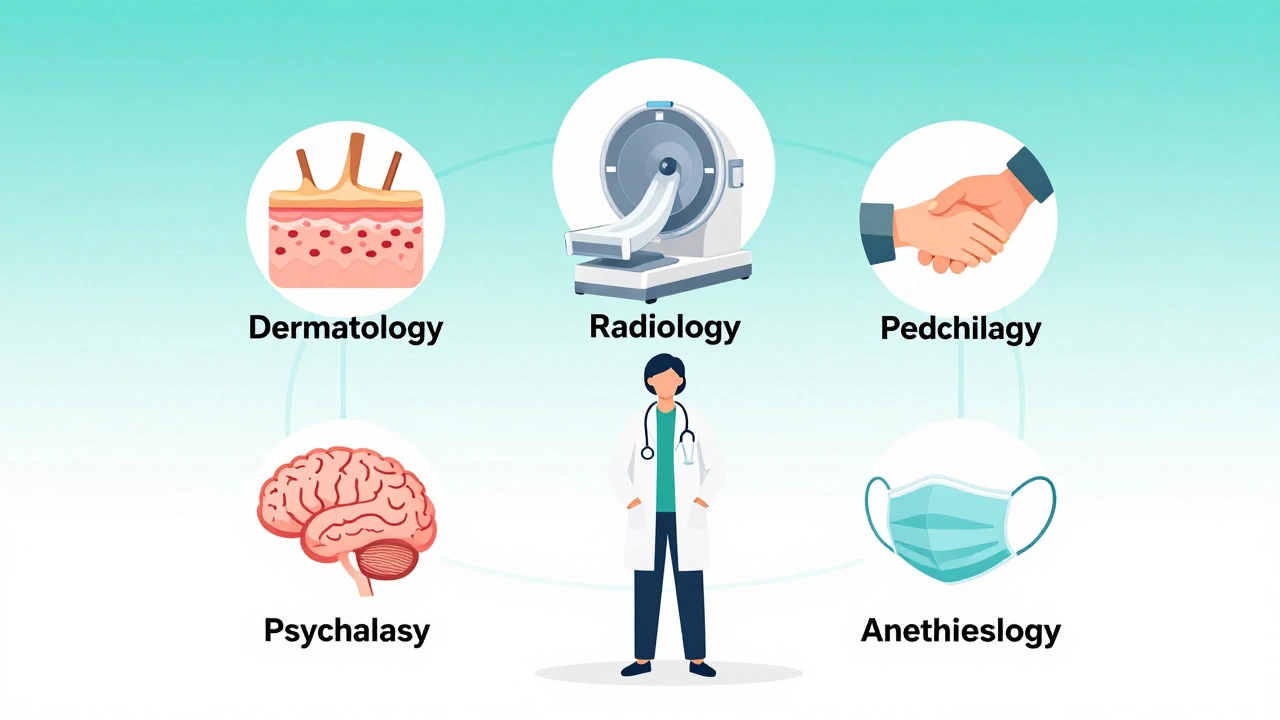
While any doctor can excel in any field, some specialties consistently rank higher among female graduates due to their structure and demands. Here are the top five choices that offer a blend of professional satisfaction and lifestyle flexibility.
- Dermatology: Often called the "lifestyle specialty," dermatology deals with skin, hair, and nails. It involves minimal emergency calls, predictable hours, and a high potential for private practice. The work is largely outpatient-based, meaning you rarely deal with life-or-death situations overnight. However, getting a seat in dermatology requires a very high NEET PG rank because it is extremely popular.
- Radiology & Imaging: Radiologists are the detectives of medicine. They interpret X-rays, MRIs, and CT scans to help other doctors diagnose diseases. This field is highly intellectual and tech-driven. With the rise of tele-radiology, you can often read scans from home, offering incredible location independence. It is physically less demanding than surgery and has low patient-facing conflict.
- Pediatrics: Many women are drawn to pediatrics because of the emotional connection with children and families. It is a communicative field where empathy is as important as medical knowledge. While there are night duties, especially in neonatal intensive care units (NICU), the overall environment is supportive. It’s a great choice if you enjoy teaching and community health.
- Psychiatry: Mental health awareness is booming, and psychiatrists are in high demand. This specialty focuses on conversation and therapy rather than procedures. Hours are typically regular, with few emergencies compared to internal medicine. It allows for deep, meaningful patient relationships and offers excellent options for private consulting.
- Anesthesiology: Once considered too stressful, anesthesiology is now a favorite for many women due to its clear end-points. You manage pain and consciousness during surgeries. The shifts are defined; once the surgery is done, your duty is mostly complete. It pays well and is essential in every hospital, ensuring job security.
Lifestyle vs. Income: Making the Trade-off
You cannot always have everything. High income often comes with high stress and irregular hours. To help you decide, let’s look at how different specialties compare across key factors.
| Specialization | Work-Life Balance | Income Potential | Emergency Stress | Private Practice Ease |
|---|---|---|---|---|
| Dermatology | Excellent | Very High | Low | Easy |
| Radiology | Good | High | Low | Moderate (Tech-heavy) |
| OB-GYN | Poor (Initial years) | High | Very High | Easy |
| Pediatrics | Moderate | Moderate | Moderate | Moderate |
| General Surgery | Poor | Very High | Very High | Difficult (Team needed) |
Notice the pattern? Non-surgical branches generally offer better work-life balance. Surgical branches like General Surgery or Orthopedics pay incredibly well but demand long, unpredictable hours. For many women who plan to raise a family or pursue hobbies outside medicine, non-surgical fields provide a safer net.
The Role of NEET Coaching in Your Decision
Your ability to choose your dream specialization starts long before postgraduate counseling-it starts with your NEET score. The higher your rank, the more options you have. This is why strategic NEET coaching is structured training designed to maximize exam scores through targeted study plans and mock tests is crucial.
A good coaching institute doesn’t just teach biology, chemistry, and physics. It helps you understand the competitive landscape. If you know you want dermatology, you need a top 100 All India Rank. If you are aiming for radiology, a rank within the top 2,000 might suffice. Coaches can analyze your mock test performance and advise whether your current trajectory aligns with your desired branch.
Moreover, modern coaching programs include career counseling modules. These sessions break down the pros and cons of each MBBS branch, helping students make informed choices rather than following peer pressure. Don’t underestimate the value of mentorship from seniors who have walked this path. Their insights into hospital culture and workload are invaluable.
Safety and Workplace Culture
Safety is a valid concern for any young professional, including women in medicine. Certain specialties involve more physical interaction with patients or higher risks of workplace violence. Emergency Medicine and Psychiatry, for instance, can sometimes involve dealing with agitated patients. While hospitals have security protocols, it’s something to consider.
In contrast, diagnostic fields like Pathology and Radiology are office-like environments. You work with machines and samples, not directly with distressed crowds. This reduces physical risk significantly. Additionally, urban centers in India and abroad offer better infrastructure for women in medicine, including safe transport and female-friendly housing near hospitals.
It’s also worth noting that leadership roles in medicine are increasingly held by women. Departments led by female directors often foster a more collaborative and supportive culture. When choosing a college for your MD or MS, look at the faculty gender ratio and alumni network. A supportive environment makes the grueling postgraduate years much easier to endure.
Future-Proofing Your Career
Medicine is evolving. Artificial Intelligence (AI) is already assisting radiologists and pathologists in detecting anomalies. Will these jobs disappear? Unlikely. AI acts as a tool, not a replacement. However, it does mean that specialists who embrace technology will thrive.
For example, a dermatologist who uses AI-powered skin scanners can diagnose conditions faster and more accurately. A psychiatrist using digital therapy platforms can reach more patients. The future belongs to doctors who combine clinical expertise with tech-savviness. When choosing a specialization, ask yourself: Is this field growing? Are there new technologies being adopted?
Fields like Genetic Counseling, Sports Medicine, and Preventive Cardiology are emerging niches with high growth potential. They may not be traditional "top" choices today, but they could be the golden tickets of tomorrow. Keep an eye on healthcare trends and global health priorities.

Common Myths Debunked
There are several myths surrounding women in medicine that need to be addressed.
- Myth: Women can’t handle surgical stress.
Reality: Many women are leading surgeons in top hospitals worldwide. Physical strength is less important than precision, stamina, and decision-making skills, which are not gender-specific. - Myth: You must sacrifice your personal life for medicine.
Reality: With proper planning and choosing the right specialization, you can have a fulfilling career and a rich personal life. Many female doctors are mothers, entrepreneurs, and artists simultaneously. - Myth: Only high ranks matter.
Reality: While rank opens doors, dedication and skill define your career. A mid-rank student who works hard in a less popular branch can earn more and be happier than a top-rank student struggling in a high-pressure field.
How to Choose: A Step-by-Step Guide
If you’re still unsure, follow this simple framework to narrow down your options.
- Assess Your Personality: Are you introverted or extroverted? Do you prefer talking to people or analyzing data? Introverts often thrive in Radiology or Pathology. Extroverts may enjoy Pediatrics or Psychiatry.
- Define Your Lifestyle Goals: Do you want to travel? Run a boutique clinic? Work in a corporate hospital? Travelers love Dermatology or Anesthesiology (locum tenens work). Clinic owners prefer Dermatology or Ophthalmology.
- Evaluate Your Academic Strengths: Are you strong in anatomy and hands-on skills? Consider Surgery or OB-GYN. Are you better at memorization and logic? Go for Internal Medicine or Radiology.
- Research the Market: Look at job postings in your target city. Which specialties are hiring? What are the salary ranges? Local demand varies greatly between metro cities and tier-2 towns.
- Talk to Practicing Doctors: Shadow a doctor in your field of interest for a day. See the reality, not the glamour. Ask about their worst days and their best moments.
Conclusion: It’s About Fit, Not Fame
There is no single "best" doctor specialization for girls. The best choice is the one that aligns with your strengths, values, and life vision. Whether you choose the high-stakes world of surgery or the quiet precision of radiology, your success depends on your passion and perseverance.
Focus on cracking NEET with a solid strategy. Use quality resources, stay consistent, and seek guidance when needed. Remember, your medical degree is a ticket to many destinations. Choose the destination that excites you, and build the roadmap to get there. Your future self will thank you for making a thoughtful, informed decision.
Is dermatology really the best specialization for girls?
Dermatology is often considered the best due to its excellent work-life balance, high income potential, and low emergency stress. However, it requires a very high NEET PG rank to secure a seat. If you don’t have a top rank, other fields like Radiology or Psychiatry offer similar lifestyle benefits with slightly lower entry barriers.
Can women become successful surgeons?
Absolutely. Many women are leading surgeons in top hospitals globally. While surgery demands long hours and physical stamina, it offers high income and immense professional satisfaction. Success depends on individual dedication, support systems, and choosing subspecialties that may offer slightly more predictability, such as Plastic Surgery or Ophthalmology.
What is the easiest medical specialization to get into?
The "easiest" specializations to get into usually require lower NEET PG ranks. These often include Community Medicine, Physiology, Biochemistry, and Anatomy. While these are academic branches with less clinical patient interaction, they offer stable government jobs and opportunities in research and teaching.
Does NEET coaching help in choosing a specialization?
Yes, indirectly. Good NEET coaching helps you achieve a higher rank, which gives you more freedom to choose your preferred specialization. Additionally, reputable coaching institutes often provide career counseling services that explain the pros and cons of various medical branches, helping you make an informed decision based on your interests and lifestyle goals.
Which medical field has the highest salary for women in India?
Surgical specialties like General Surgery, Orthopedics, and Neurosurgery typically offer the highest salaries, followed by Dermatology and Radiology in private practice. However, income varies greatly depending on location, experience, and whether you work in a government hospital or private sector. Dermatology is particularly lucrative for those who start their own clinics.