MBBS Cost Estimator (India)
Estimated Investment
Key Takeaways on Medical School Costs
- Government colleges are incredibly affordable, often costing less than ₹1 lakh per year.
- Private colleges vary wildly, ranging from ₹10 lakhs to ₹25 lakhs per year.
- Management quota seats are the most expensive, sometimes crossing ₹1 crore for the full course.
- Hidden costs like hostels, books, and equipment can add another ₹2-5 lakhs to your total budget.
The Massive Gap Between Government and Private Costs
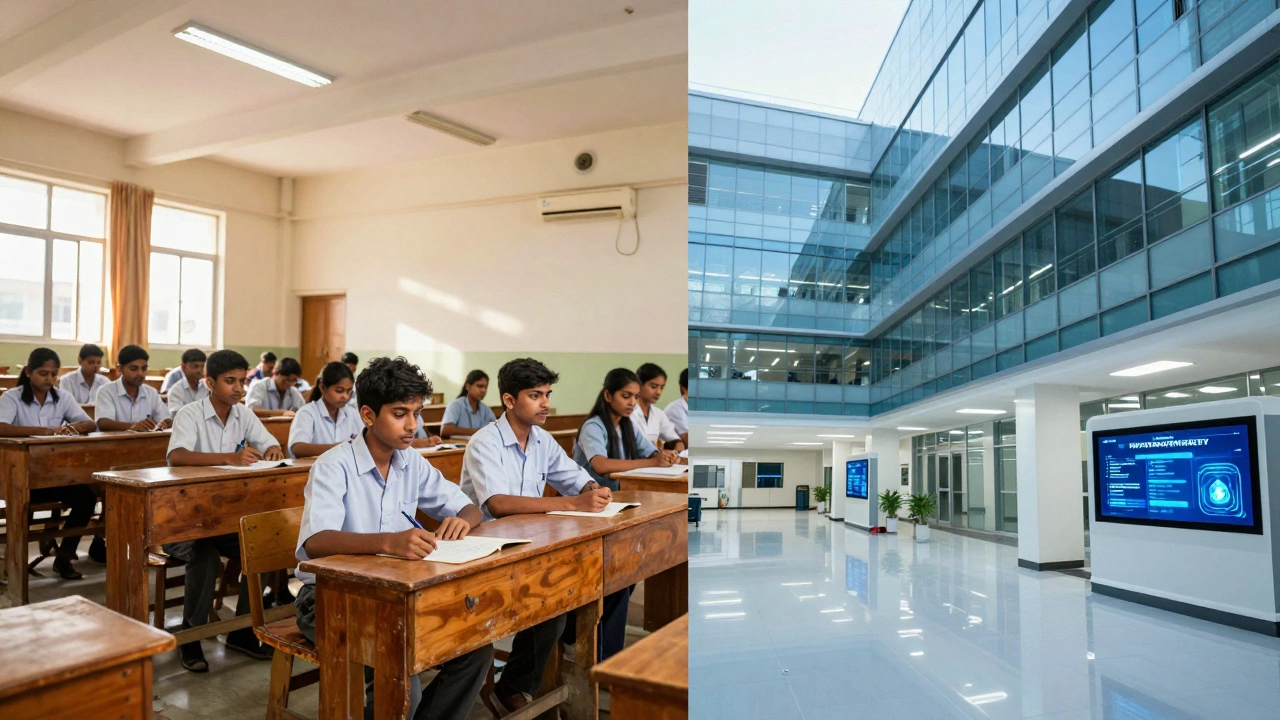
If you score high enough to get into a government seat, you're basically getting a world-class education for the price of a mid-range smartphone. The government heavily subsidizes these seats to ensure that talented students from all economic backgrounds can become doctors. In a Government Medical College, the tuition is nominal. You might pay between ₹5,000 and ₹50,000 per year depending on the state. For example, in some state-run institutions in Rajasthan or Maharashtra, the annual fee is barely enough to cover the electricity in the lecture halls. On the flip side, private institutions operate as businesses. They invest heavily in infrastructure, high-tech labs, and air-conditioned campuses. Because they don't get the same subsidies, they pass those costs on to the students. If you aren't in the top 1% of MBBS fees in India for private colleges, you're looking at a significant financial commitment. These fees often start at ₹10 lakhs per year and can climb much higher depending on the prestige of the university.Breaking Down the Different Types of Seats
Not all seats in a private college are created equal. This is where the confusion usually starts for parents and students. There are generally three tiers of pricing based on how you enter the college.| Seat Category | Who Gets It? | Estimated Annual Fee | Total Cost (5.5 Years) |
|---|---|---|---|
| Government Quota | NEET rankers (State/AIQ) | ₹10,000 - ₹1,00,000 | ₹50k - ₹6 Lakhs |
| Private Quota | NEET qualified (Lower ranks) | ₹10 Lakhs - ₹25 Lakhs | ₹55 Lakhs - ₹1.4 Crore |
| Management Quota | Direct admission/High pay | ₹20 Lakhs - ₹50 Lakhs | ₹1.1 Crore - ₹2.8 Crore |

The Hidden Costs No One Tells You About
When you see a brochure that says "Tuition Fee: ₹12 Lakhs," that's just the starting point. The actual cost of living and studying is higher. Let's get real about the expenses that sneak up on you. First, there is the Hostel and Mess. Most medical colleges require you to live on campus because the hours are brutal. A decent room and three meals a day can cost anywhere from ₹80,000 to ₹2,00,000 per year. If you're in a city like Mumbai or Bangalore, expect the higher end of that scale. Then come the instruments. You'll need a high-quality stethoscope, a sphygmomanometer, and a variety of textbooks. A standard medical textbook like Gray's Anatomy or Harrison's Principles of Internal Medicine can cost a few thousand rupees each. Over five years, you'll spend a small fortune on books, scrubs, and lab coats. Don't forget the "Caution Deposit." Most colleges ask for a refundable deposit at the time of admission. This can range from ₹1 lakh to ₹5 lakhs. While you get it back eventually, it's a huge upfront cost that catches many families off guard.How NEET Rank Directly Impacts Your Wallet
Your performance in the NEET is essentially a financial document. A rank of 500 might mean you spend almost nothing on tuition. A rank of 50,000 might mean you're forced into the private sector where you'll spend millions. There's also the All India Quota (AIQ). This allows students to apply for government seats in states other than their own. If you secure an AIQ seat, you're paying government rates even if the college is in a different part of the country. This is the gold mine for students because it opens up more low-cost options across India. If you miss the cutoff for government seats but still want to study in India, you have to decide if you can afford the private climb. Many students look at Deemed Universities. These are private institutions that have the status of a university. They generally have their own fee structures, which are typically higher than state private colleges but potentially lower than some high-end management seats.
Financing Your Medical Education
Since the costs can be astronomical, most people don't just pay out of pocket. Education loans are the primary tool here. Banks in India are generally very open to giving loans for MBBS because the "employment guarantee" for a doctor is very high. When applying for a loan, banks will look at the college's accreditation. If the college is recognized by the National Medical Commission (NMC), getting a loan is straightforward. The NMC is the regulatory body that sets the standards for medical education in India; without their approval, a degree is useless, and a bank won't touch the loan. Pro tip: Look for scholarships offered by state governments for students from marginalized communities or those with exceptional merit. Some states provide full stipends that cover not just the tuition but the living expenses as well.
Is the Investment Worth It?
Spending ₹1 crore on a degree is a terrifying thought. But you have to look at the ROI (Return on Investment). A doctor's earning potential in India is high, though the starting salary for a junior resident in a government hospital isn't exactly "millionaire status." The real money comes later, after specialization (MD/MS) and building a private practice. However, if you're taking a massive loan, remember that you'll be spending another 3 years in post-graduation. That's 8-9 years of education before you start making the big bucks. If the fees are too high, some students choose to study abroad in countries like Russia or Georgia, though this comes with its own set of challenges and the requirement to pass the FMGE (Foreign Medical Graduate Examination) to practice back in India.What is the cheapest way to do MBBS in India?
The cheapest way is to secure a seat in a Government Medical College through a high rank in the NEET exam. Tuition fees in these colleges can be as low as ₹5,000 to ₹50,000 per year, making it the most affordable path.
Do private colleges have a fixed fee?
No, fees vary by institution. Some private colleges charge ₹10 lakhs per year, while others may charge ₹25 lakhs or more, especially for management quota seats. Always check the specific college's current fee structure on their official website.
What is the Management Quota?
The Management Quota consists of seats in private colleges that are filled independently of the government's merit list. These seats typically come with a much higher fee, often several times the cost of a merit seat.
Are there any scholarships for MBBS students?
Yes, various state governments and private trusts offer scholarships based on merit and economic background. Some students also qualify for central government scholarships that help cover the cost of tuition and hostels.
How much do books and equipment cost?
Depending on the year of study, you can expect to spend between ₹20,000 and ₹50,000 annually on textbooks, medical kits, stethoscopes, and other essential tools.
Next Steps for Aspiring Doctors
If you're just starting your journey, your focus shouldn't be on the fees, but on the NEET score. The higher your score, the lower your financial burden. For those already calculating budgets:- List out your top 5 target government colleges to understand the base cost.
- Research the "cutoff" ranks for private colleges in your preferred state.
- Talk to a bank about pre-approved education loans to see what your interest rates would be.
- Create a "Hidden Cost' spreadsheet including hostels, food, and books.