Board Exam Recognition: What It Means and Why It Matters in India
When you finish school in India, your board exam recognition, the official acceptance of your school board’s exams by colleges, employers, and government bodies. Also known as education board validity, it determines whether your marks will be accepted for higher education or jobs. Not all boards are treated the same. If your board isn’t recognized properly, you could face delays, extra tests, or even rejection—no matter how well you scored.
Two major boards dominate the conversation: CBSE, the Central Board of Secondary Education, widely accepted across India and abroad for its standardized testing, and ICSE, the Indian Certificate of Secondary Education, known for deeper syllabus coverage and emphasis on writing skills. While CBSE is the default choice for most students due to its alignment with competitive exams like JEE and NEET, ICSE is equally valid—but sometimes triggers extra verification steps because of its different structure. State boards vary even more. Some, like Maharashtra’s SSC or Tamil Nadu’s SSLC, are fully recognized, while others face skepticism from private universities or out-of-state institutions.
Board exam recognition isn’t just about paperwork. It affects your ability to apply for scholarships, sit for civil service exams, get into foreign universities, or even land internships. Employers in tech, finance, and government often list "CBSE/ICSE equivalent" as a requirement—not because one is better, but because they know what to expect. A student from a lesser-known board might need to provide additional transcripts, syllabus details, or even take a bridge course just to prove they met the same standards.
The good news? Most recognized boards in India—CBSE, ICSE, and major state boards—are legally valid under the National Education Policy. But recognition isn’t automatic. You need to confirm it for your specific goal: if you’re aiming for an IIT, CBSE’s alignment with JEE gives you an edge. If you’re applying to a UK university, ICSE’s international equivalence might help. And if you’re planning to work in a government job, check the official notification—some posts specify "recognized board" without naming one.
What you’ll find below are real stories and data from students who’ve navigated these hurdles. From how ICSE students got into top engineering colleges despite assumptions, to why a state board student had to retake an entrance exam just to prove their marks were valid. These aren’t hypotheticals—they’re the kind of roadblocks you can avoid if you know what to look for.
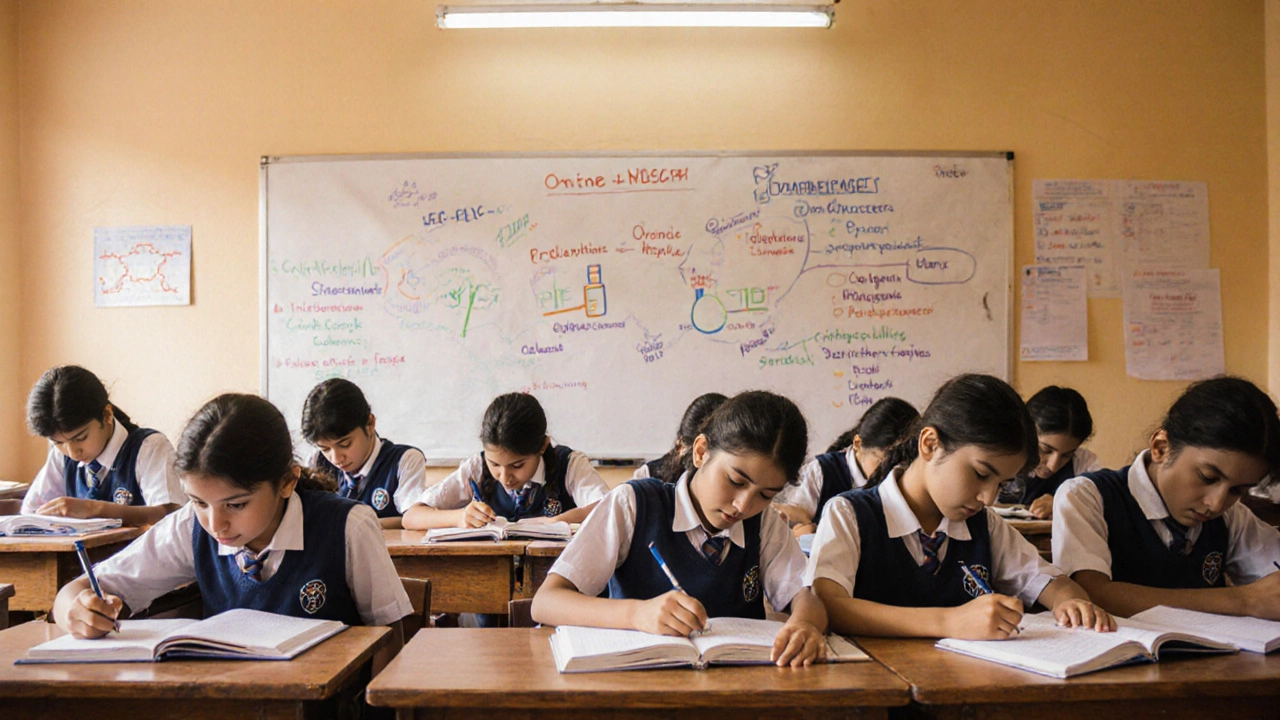
Which Board Has the Highest Value in India for School Education?
Nov 18, 2025 / 0 Comments
CBSE is the most valuable board in India for students aiming for engineering, medicine, or government jobs due to its alignment with JEE, NEET, and national university admissions. Other boards like ICSE and state boards have strengths but offer fewer national opportunities.
READ MORERECENT POSTS
- 5 Phases of eLearning: How Effective Online Learning Actually Happens
- How Much Money Do You Make from Coding? Real Salaries in 2025
- Most Felon Friendly States: Getting a Second Chance at Government Jobs
- Is an MBA Harder Than a Masters? What Sets Them Apart
- Discover Your Hidden Skills for Profitable Side Hustles