
eLearning Risk & Suitability Calculator
⚙ Assess Your Situation
Answer the following questions to determine your likelihood of success or failure in an eLearning environment.
Assessment Result
Complete the form to see your eLearning risk profile and personalized tips.
We often hear that eLearning is the future of education. It promises flexibility, accessibility, and cost savings. But if you have ever tried to learn a complex skill through a screen, you know the reality can be quite different. While online education platforms deliver content digitally to learners anywhere in the world, they come with significant downsides that are rarely discussed in marketing brochures.
The shift to digital learning accelerated rapidly after 2020, but it exposed deep structural weaknesses. From technical glitches to social isolation, the disadvantages of eLearning can hinder progress for many students. Understanding these pitfalls is crucial before you commit time and money to an online course or corporate training program.
The Struggle with Self-Discipline and Motivation
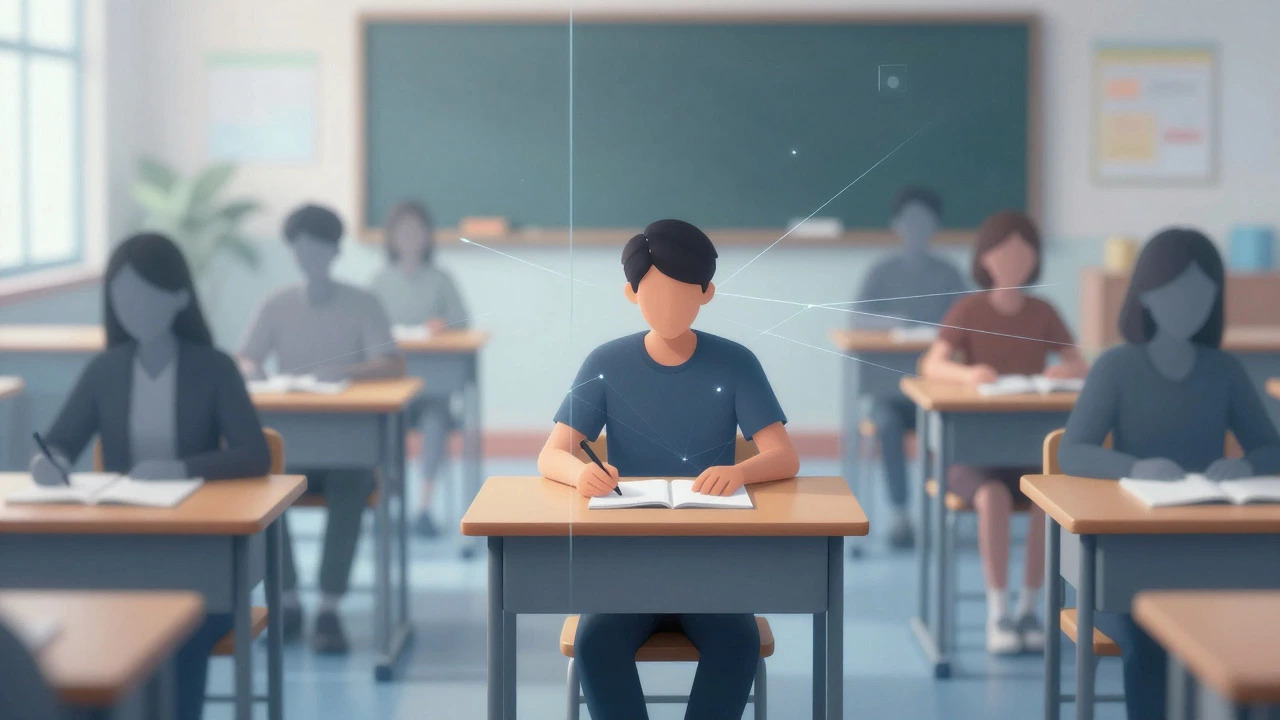
The biggest hurdle in remote learning is not the technology; it is human psychology. In a traditional classroom, there is physical presence. You see your peers, you feel the pressure of the instructor’s gaze, and you follow a rigid schedule. Online, none of that exists. You are alone in your room, staring at a laptop.
Without external structure, procrastination thrives. Studies on adult learning behavior show that completion rates for massive open online courses (MOOCs) often hover below 15%. Why? Because maintaining self-regulated learning habits requires intense mental energy. When you can hit "pause" on a lecture or skip a module because you are tired, most people do. The freedom that sells eLearning becomes its greatest weakness when motivation dips.
You might think you are disciplined enough. But consider this: how often do you check your phone during work hours? Now imagine doing that while trying to understand quantum physics or advanced accounting. The distractions at home-family, pets, chores-are constant. Unlike a quiet library or a dedicated classroom, your home environment is rarely optimized for deep focus.
Social Isolation and Lack of Peer Interaction
Education is inherently social. We learn by debating, collaborating, and observing others. Online classrooms strip away much of this nuance. Video calls can replace face-to-face meetings, but they cannot replicate the spontaneous hallway conversations where real learning often happens.
In a physical university or training center, you build a network. You meet classmates who become future colleagues, friends, or mentors. In eLearning, interaction is often limited to discussion forums or chat boxes. These text-based interactions lack tone, body language, and immediacy. A quick question in person takes ten seconds; typing it out, waiting for a reply, and reading it back can take an hour.
This isolation affects retention too. Social reinforcement helps memory. When you explain a concept to a peer, you solidify your own understanding. Without peers, you are passively consuming information. This leads to a superficial grasp of the material. You might pass the quiz, but you won’t truly master the skill.
Technical Issues and the Digital Divide
Let’s talk about the elephant in the room: technology fails. And when it fails, learning stops. Internet connectivity issues are the most common complaint among online learners. Buffering videos, dropped Zoom calls, and slow upload speeds turn a simple lesson into a frustrating ordeal.
But it goes beyond just Wi-Fi. You need a decent device. Not everyone has a high-end laptop or a reliable smartphone. This creates a digital divide where access to quality education depends on hardware ownership. Students from lower-income backgrounds may struggle with outdated devices that crash during exams or cannot run necessary software.
Then there is the platform itself. Many eLearning management systems (LMS) are clunky and unintuitive. Navigating a poorly designed interface wastes valuable time. If you spend twenty minutes figuring out how to submit an assignment instead of studying, the system is working against you. Technical support is often slow or non-existent, leaving learners stranded when things break.
Limited Hands-On Practice and Practical Skills
Some subjects simply do not translate well to screens. You can read about surgery, engineering, or cooking all day, but until you hold the scalpel, weld the metal, or chop the onion, you haven’t learned anything. Practical skills training suffers immensely in virtual environments.
Simulators help, but they are expensive and not always available. For trades like plumbing, electrical work, or laboratory science, hands-on experience is non-negotiable. Virtual labs offer a glimpse, but they lack the tactile feedback and unexpected variables of the real world. Mistakes in simulation have no consequences; mistakes in reality do.
Even soft skills like public speaking or negotiation are hard to practice online. Camera angles, audio lag, and the inability to read the room make role-playing exercises awkward and ineffective. Employers often note that graduates from purely online programs lack the practical confidence needed on day one of a job.
Evaluation Challenges and Academic Integrity
How do you know what someone really knows if they are taking a test in their pajamas? Online assessment faces a credibility crisis. Proctoring software tries to solve this by monitoring eye movements and room scans, but it feels invasive and often produces false positives.
Cheating remains rampant. With a few tabs open, it is easy to find answers. This devalues the certificate or degree. Employers are becoming increasingly skeptical of online credentials unless they come from highly reputable institutions with rigorous verification processes.
Instructors also struggle to give meaningful feedback. Grading hundreds of automated quizzes is easy, but providing personalized comments on essays or projects is time-consuming. As a result, students often receive generic feedback like "Good job" or "Needs improvement," which does little to help them grow.

Health Impacts of Screen-Based Learning
We spend more time than ever looking at screens. Adding hours of study to that mix takes a toll on your health. Digital eye strain is a real condition characterized by dry eyes, headaches, and blurred vision. Sitting for long periods without moving leads to poor posture, back pain, and reduced circulation.
Mental health is also affected. The blurring of boundaries between work, study, and leisure contributes to burnout. There is no "commute" to signal the end of the school day. Your bedroom becomes your classroom, making it harder to relax and sleep. This constant state of alertness leads to fatigue and decreased cognitive performance over time.
| Factor | Traditional Classroom | eLearning Environment |
|---|---|---|
| Social Interaction | High (face-to-face, spontaneous) | Low (scheduled, text/video-based) |
| Discipline Required | External (schedule enforced by institution) | Internal (self-motivation critical) |
| Practical Application | Immediate access to tools/labs | Limited to simulations/theory |
| Cost Barrier | Tuition + commuting/housing | Hardware + internet + tuition |
| Feedback Speed | Instant (ask teacher directly) | Delayed (email/forum responses) |
Information Overload and Cognitive Fatigue
Online courses often dump vast amounts of information on learners at once. PDFs, videos, readings, quizzes-it all piles up. Without a teacher to guide the pace, students suffer from cognitive overload. They try to consume everything quickly rather than digesting it deeply.
The design of many platforms encourages skimming rather than studying. Click-through animations and short video clips create an illusion of progress. You finish the module, but did you learn? Often, no. The sheer volume of available resources can be paralyzing, leading to decision fatigue and abandonment.
Is eLearning less effective than traditional classroom learning?
It depends on the subject and the learner. For theoretical knowledge, eLearning can be equally effective if the student is self-disciplined. However, for skills requiring hands-on practice or strong social interaction, traditional methods generally yield better outcomes due to immediate feedback and peer collaboration.
How can I stay motivated while studying online?
Create a dedicated study space separate from relaxation areas. Set a strict schedule with start and end times. Use techniques like the Pomodoro method to manage focus. Join online study groups or find an accountability partner to simulate peer pressure and social connection.
Are online degrees respected by employers?
Yes, provided they are from accredited institutions. Employers care more about the reputation of the university and the relevance of the skills than the delivery mode. However, purely self-paced certificates from unknown platforms carry less weight than structured degrees from recognized universities.
What are the best ways to overcome technical difficulties in eLearning?
Invest in a stable broadband connection and a reliable backup hotspot. Keep your software updated. Download materials offline when possible to avoid streaming issues. Familiarize yourself with the LMS interface before the course starts to reduce friction during actual study sessions.
Can eLearning lead to loneliness?
Absolutely. The lack of casual social interaction can lead to feelings of isolation. To combat this, actively participate in discussion forums, attend optional live webinars, and seek out local alumni networks or interest groups related to your field of study.