
English Fluency Tracker
How Close Are You to English Fluency?
Track your daily habits to estimate when you'll reach fluency. The article emphasizes that fluency isn't about perfect grammar—it's about consistent practice.
Your Fluency Progress
Estimated time to fluency:
Daily practice required:
Want to speak English fluently but don’t know where to start? You don’t need expensive classes, tutors, or study abroad programs. Fluency isn’t about memorizing grammar rules-it’s about building habits that make English feel natural. Millions of people have done it on their own. You can too.
Stop thinking in your native language
Most people fail because they translate in their heads. You hear a question in English, think of the answer in your language, then try to word it in English. That delay kills fluency. The goal isn’t perfect grammar-it’s instant reaction. Start labeling things around you in English. Your coffee mug, the chair you’re sitting on, the street outside. When you cook, say the steps out loud: “I’m chopping onions. I’m heating oil.” Don’t wait to be ready. Start talking to yourself. It feels weird at first, but after a week, your brain starts thinking in English without trying.Listen like you’re learning a song
You didn’t learn your first language by studying textbooks. You heard it over and over-songs, stories, conversations. Do the same with English. Pick one podcast or YouTube channel you like. It could be a comedian, a vlogger, or even a cooking show. Listen to the same 5-minute clip every day for a week. Don’t take notes. Don’t look up words. Just listen. After a few days, you’ll start catching phrases without thinking. You’ll notice how people link words: “Wanna go?” instead of “Do you want to go?” That’s real English. Try shadowing. Play a short audio clip and repeat what you hear, right after the speaker. Match their rhythm, their pauses, their tone. It’s like singing along to a song. After 10 minutes a day for two weeks, your mouth starts forming sounds naturally.Speak every single day-even if it’s awkward
Fluency isn’t built in classrooms. It’s built in messy, imperfect moments. Find a language partner online. Apps like Tandem or HelloTalk connect you with native speakers who want to learn your language. You chat for 15 minutes in English, they chat for 15 minutes in your language. No pressure. No grades. Just real talk. If you’re shy, talk to your phone. Record yourself answering simple questions: “What did you do today?” “What’s your favorite movie?” Play it back. Don’t cringe. Listen for patterns. Do you always say “I think…” before every opinion? Do you pause too long before verbs? Awareness is the first step to change.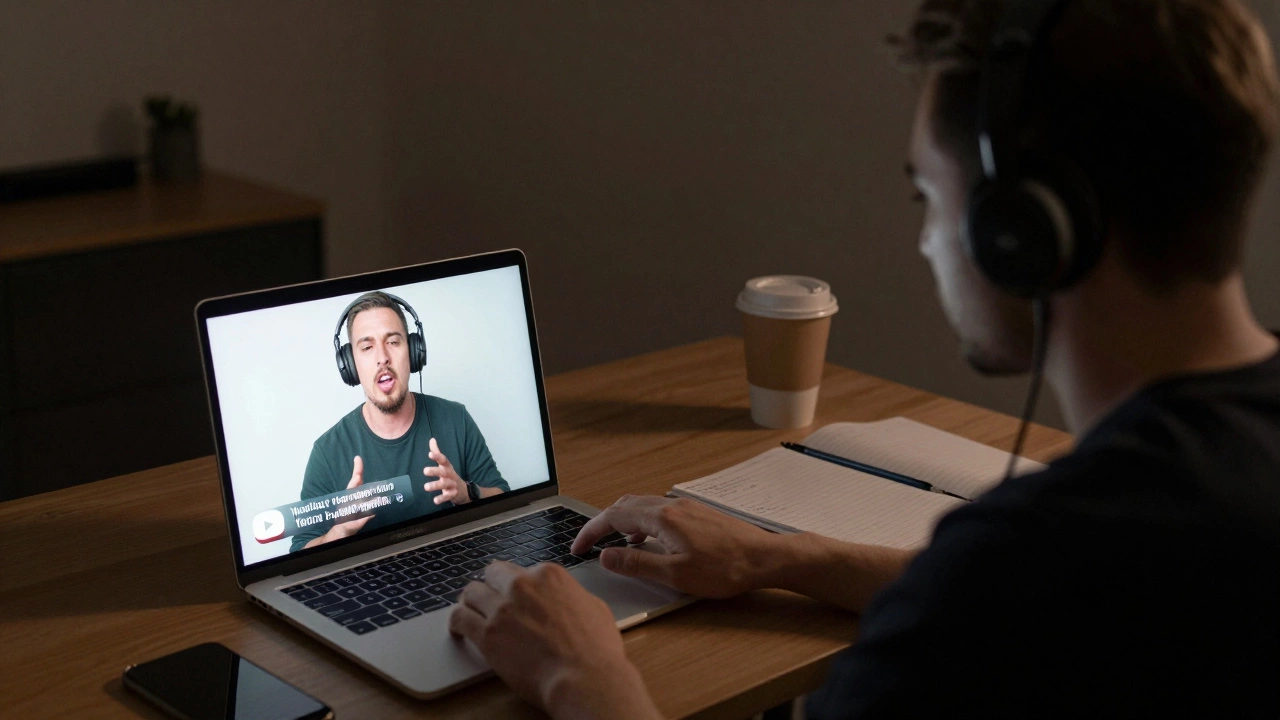
Use English for things you already do
Don’t treat English like a subject. Treat it like a tool. Switch your phone, social media, and streaming apps to English. Watch Netflix with English subtitles-not your native language. Read news headlines. Scroll through Reddit threads. When you see a word you don’t know, guess its meaning from context. Look it up only if it shows up three times in a week. Write your to-do list in English. Text a friend in English. Even if it’s just “Hey, going to grab coffee later.” You’re not practicing English-you’re using it to live.Focus on chunks, not grammar rules
Nobody says “I am going to the store to purchase groceries.” They say, “Heading to the store for groceries.” Fluency is built on phrases, not sentences. Collect common chunks:- “I’m kinda tired today.”
- “Let’s grab a bite.”
- “That’s not my thing.”
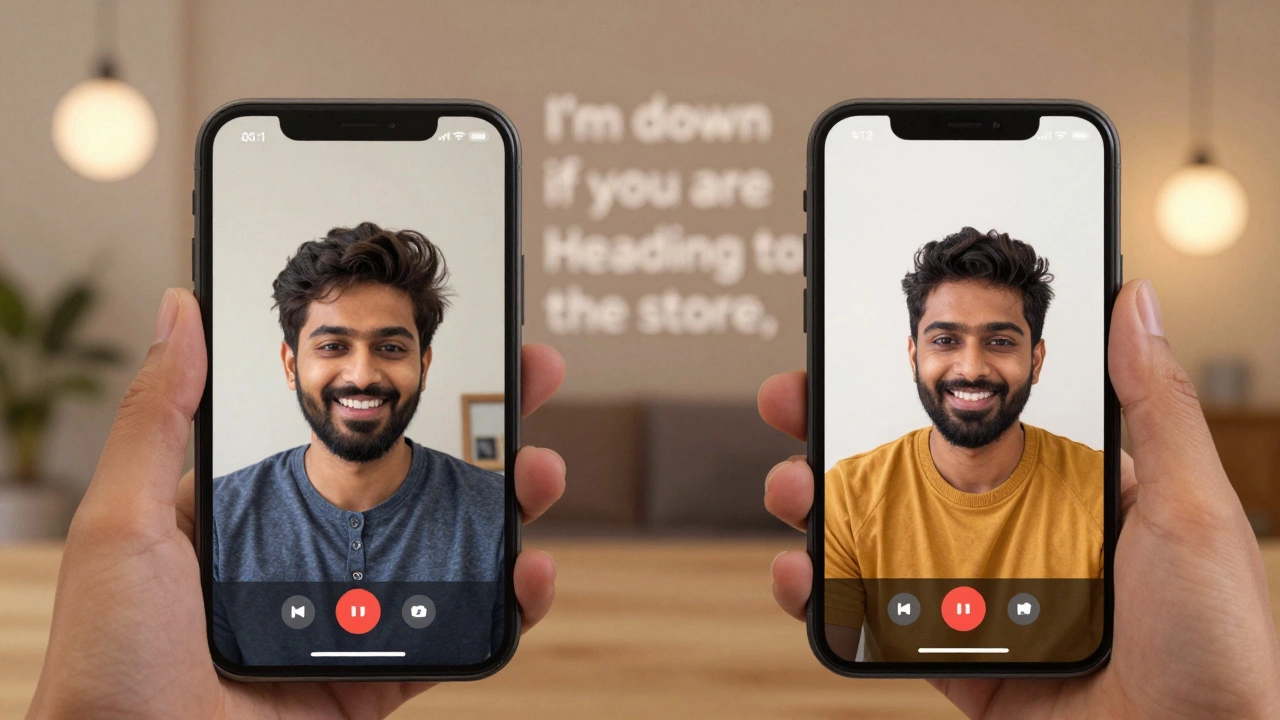
- “I’m down if you are.”
Measure progress by understanding, not accuracy
You don’t need to speak perfectly. You need to be understood. Track your progress this way: Can you follow a 10-minute YouTube video without pausing? Can you join a group chat and respond without overthinking? Can you explain your weekend plans without stopping to think of words? If yes, you’re getting fluent. Fluency isn’t about knowing 5,000 words. It’s about knowing how to use 500 words confidently. Most native speakers use fewer than 1,000 words daily. You don’t need more.What blocks fluency-and how to break through
Fear of mistakes is the biggest roadblock. You’re not alone. But here’s the truth: every native speaker makes mistakes. They say “I seen it” instead of “I saw it.” They mix up “there,” “their,” and “they’re.” Nobody cares if you’re not perfect. The moment you say “I’m not ready,” you freeze. Instead, say: “I’m not perfect yet.” That tiny shift changes everything. Mistakes aren’t failures-they’re data. Each one tells you what to practice next. If you’re stuck, try this: pick one thing to improve each week. Week 1: Use contractions. Week 2: Speak without pausing. Week 3: Ask one question in English every day. Small wins build confidence faster than perfect grammar ever will.Real fluency takes 6-12 months
There’s no magic shortcut. But there is a pattern. People who speak fluently didn’t study harder-they studied smarter. They spoke daily. They listened actively. They stopped waiting to be ready. If you practice just 20 minutes a day-listening, speaking, repeating-you’ll notice a shift in 30 days. In 90 days, strangers will ask where you’re from. In 6 months, you’ll dream in English. Fluency isn’t a destination. It’s a habit. Start today. Talk to yourself. Listen without translating. Speak without fear. The language will follow.How long does it take to become fluent in English?
Most people reach conversational fluency in 6 to 12 months with consistent daily practice-around 20 to 30 minutes a day. This doesn’t mean perfect grammar. It means you can hold a conversation without translating in your head, understand native speakers in casual settings, and express your thoughts naturally. Speed depends on how much you listen and speak, not how many grammar rules you memorize.
Do I need to learn grammar to speak fluently?
You don’t need to study grammar rules to speak fluently. You need to learn how English sounds and flows. Focus on listening to real conversations and repeating common phrases. Grammar becomes clear through exposure, not memorization. For example, you’ll naturally pick up that “I’ve been working” is used for ongoing actions after hearing it dozens of times. Save grammar deep dives for when you want to write formally-not when you’re learning to talk.
Is it better to practice with native speakers or other learners?
Both help, but for different reasons. Practice with native speakers to hear real speech patterns, slang, and natural rhythm. Practice with other learners to build confidence without fear of judgment. The best approach is a mix: speak with natives once or twice a week, and practice daily with fellow learners or by yourself. Don’t wait for the “perfect” partner-start now with whoever is available.
What apps or tools help with speaking English?
For speaking practice, use Tandem or HelloTalk to chat with native speakers. Use YouGlish to hear how words are used in real videos. Try ELSA Speak or Speechling for pronunciation feedback. Listen to podcasts like “All Ears English” or “The English We Speak” daily. Don’t overdo it-use one or two tools consistently instead of jumping between ten.
I’m embarrassed to speak. How do I get over it?
Start by speaking where no one can judge you-like talking to your reflection, your pet, or recording yourself. Then move to low-pressure situations: text a language partner, comment on a YouTube video in English, or join a small online group. Every time you speak, you’re rewiring your brain. Embarrassment fades when you realize that most people are too focused on their own words to notice yours. Progress, not perfection, is the goal.
Can I become fluent without living in an English-speaking country?
Absolutely. Thousands of people become fluent without ever stepping foot in an English-speaking country. What matters isn’t location-it’s immersion. Surround yourself with English daily: listen to music, watch shows, change your phone settings, speak out loud, write in English. Create your own environment. You don’t need to travel-you need to engage.
Speak English fluently isn’t about talent. It’s about showing up every day, even when it feels awkward. The language doesn’t care how smart you are. It only cares how often you use it.