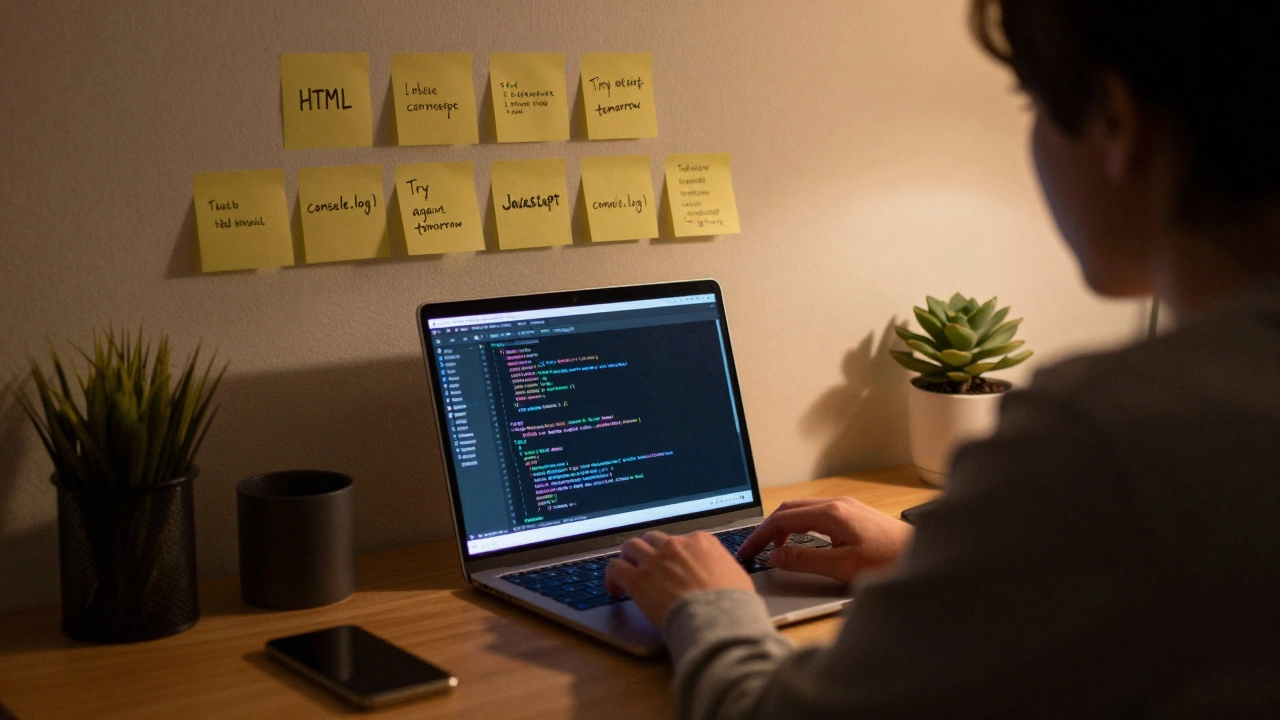
Self-Learning Timeline Calculator
How Long Will It Take You?
Estimate your personalized coding journey based on the realistic 10-15 hours/week framework from the article. Enter your weekly commitment and see your custom timeline.
Can you really learn to code on your own? It’s not just a question-it’s a decision that changes everything. Thousands of people start coding every day, hoping to switch careers, build apps, or just understand how the digital world works. But then they hit a wall: coding classes cost money, take time, and feel overwhelming. So they ask: Is it even possible to do this alone? The answer isn’t a simple yes or no. It’s more like: Yes, but here’s how it actually works.
People Do It-All the Time
Look at the data. A 2024 survey by Stack Overflow found that 42% of professional developers in the U.S. and Australia taught themselves to code. No bootcamp. No degree. Just a laptop, a free online resource, and stubbornness. In Sydney alone, I’ve met freelancers who built entire SaaS tools from scratch using YouTube tutorials and documentation. One guy learned Python by rewriting the same game 17 times. Another learned JavaScript by reverse-engineering a website button that changed color when you hovered over it. They didn’t wait for permission. They just started.
Here’s the thing: coding isn’t magic. It’s a skill, like cooking or playing guitar. You don’t need a teacher to learn how to boil water or strum a chord. You need practice, feedback, and patience. The difference with coding is that the feedback loop is instant. Your code either runs or breaks. That’s not a bug-it’s a feature.
What You Actually Need to Start
You don’t need a $1,000 course. You don’t need a fancy setup. You need three things:
- A free code editor (like Visual Studio Code)
- A free learning platform (like freeCodeCamp or MDN Web Docs)
- A project idea that excites you (even if it’s tiny)
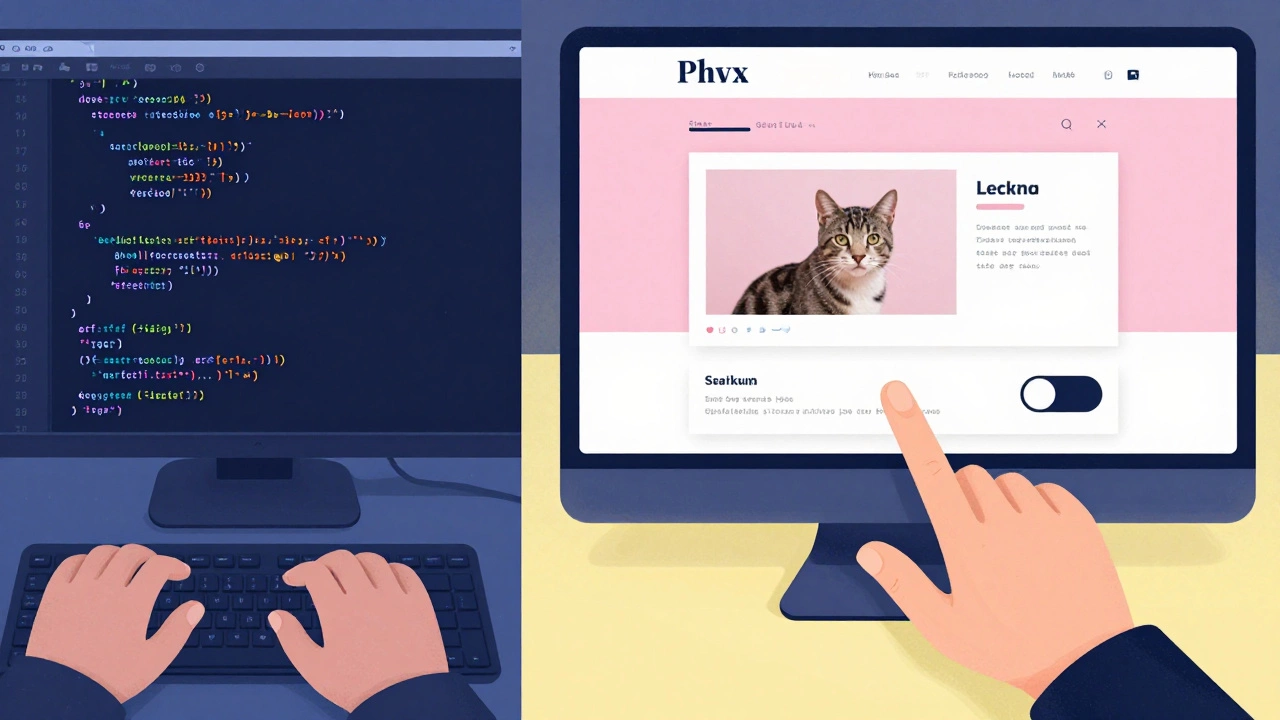
Start with HTML and CSS. Build a personal page. Not a resume. Not a portfolio. Just a page about your favorite movie, pet, or hobby. Add a photo. Change the font. Make the background pink. Now you’ve coded something real. That’s more valuable than any tutorial quiz.
Then move to JavaScript. Make a button that toggles a dark mode. Make a countdown timer for your birthday. Make a to-do list that saves to your browser. Each of these tiny projects teaches you more than 10 hours of passive video watching.
The Hidden Problem: Getting Stuck
Most people quit coding not because it’s hard-but because they get stuck and don’t know how to get unstuck. You’ll hit an error message like “Uncaught TypeError: Cannot read property ‘length’ of undefined.” It looks like alien code. You Google it. You copy-paste a fix from Stack Overflow. It works. But you have no idea why.
That’s normal. But here’s the trap: if you keep doing that, you’ll never learn. You’ll become a copy-paste coder, not a thinker.
The fix? Slow down. When you get stuck:
- Read the error message word by word.
- Look at the line number.
- Ask: “What was I trying to do here?”
- Use console.log() to print out what your variables actually contain.
- Try changing one thing at a time.
That’s how real coders solve problems. Not by asking for help immediately. But by becoming detectives of their own code.
Why Most People Fail-And How to Avoid It
The biggest reason people give up on self-learning is that they treat coding like a textbook subject. They think: “I need to learn everything before I build anything.” So they spend months on theory, syntax, algorithms-without ever seeing a working app.
Here’s what actually works: Build first. Learn as you go.
Want to make a weather app? Don’t start with JavaScript arrays. Start by finding a free API that gives weather data. Then figure out how to fetch it. Then display it. Then make it look nice. You’ll learn JavaScript, APIs, async functions, and DOM manipulation-all while building something you care about.
Another trap: comparing yourself to bootcamp grads. They learned in 12 weeks. So you think you’re behind. But here’s the truth: bootcamps are pressure cookers. They teach you to pass interviews, not to think. Self-taught coders often take longer, but they build deeper understanding. They can explain why something works. Bootcamp grads often can’t.
The Tools That Actually Help
You don’t need 20 tools. You need 4:
- Visual Studio Code - Free, fast, and packed with helpful features like auto-complete and debugging.
- freeCodeCamp - Completely free, project-based, and trusted by over 5 million learners.
- MDN Web Docs - The official, accurate, and constantly updated reference for HTML, CSS, and JavaScript.
- GitHub - Not just for sharing code. Use it to save your progress, track what you’ve built, and show it to employers.
And here’s one you won’t hear about in ads: CodePen. It lets you write HTML, CSS, and JavaScript in your browser and see results instantly. No install. No setup. Just start.
How Long Does It Take?
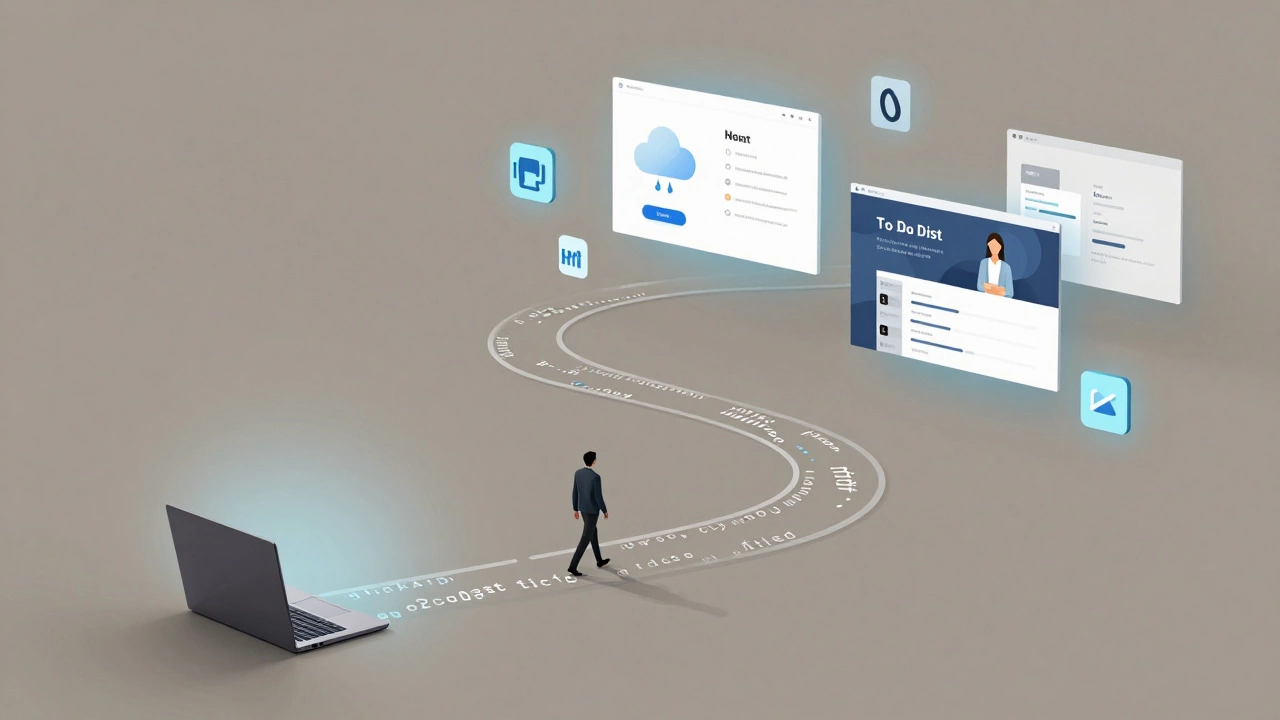
There’s no magic number. But here’s a realistic timeline based on 10-15 hours per week:
- Month 1: Build static pages with HTML and CSS. Learn how browsers work.
- Month 2: Add interactivity with JavaScript. Make buttons, forms, and simple animations.
- Month 3: Learn how to fetch data from APIs. Build a real app-like a quote generator or a news feed.
- Month 4: Start using Git and GitHub. Push your code. Share it. Ask for feedback.
- Month 6: You’ll have 3-5 real projects. You can start applying for junior roles, freelance gigs, or internships.
That’s not fast. But it’s real. And it’s sustainable.
What Comes After the Basics?
Once you can build simple apps, you’ll face new questions: Should I learn React? Python? Node.js? SQL?
Here’s the rule: Follow the project, not the trend.
- Want to build a mobile app? Learn React Native.
- Want to analyze data? Learn Python and Pandas.
- Want to automate tasks? Learn JavaScript with Node.js.
- Want to build a website with a database? Learn SQL and a backend framework.
You don’t need to learn them all. You need to learn the one that helps you build your next idea.
Final Thought: You Don’t Need to Be Perfect
The biggest myth about coding is that you have to be smart. You don’t. You just have to be consistent.
I know someone in Sydney who started coding at 52. She had no tech background. She spent 30 minutes a day on freeCodeCamp. After 8 months, she built a website for her local knitting group. It’s not fancy. It doesn’t have AI. But it works. And she’s proud.
You don’t need to be the next Elon Musk. You just need to build something-anything-that didn’t exist before. That’s how coding changes lives. Not through classes. But through doing.
Can I really get a job if I learn to code on my own?
Yes, absolutely. Many companies now prioritize skills over degrees. If you can show 3-5 working projects on GitHub, write clean code, and explain how you solved problems, you’ll compete with bootcamp grads. In fact, some hiring managers prefer self-taught developers because they demonstrate initiative and problem-solving skills. Look at job postings for junior roles-they often say “portfolio required,” not “degree required.”
What if I get bored or lose motivation?
Boredom means you’re learning the wrong thing. Stop following tutorials. Start building something you care about-even if it’s silly. A website for your cat? A quiz about your favorite TV show? A timer for your coffee breaks? When you’re emotionally invested, motivation follows. Coding isn’t about memorizing syntax. It’s about solving problems that matter to you.
Is it too late to start if I’m over 30?
No. The average age of someone switching into tech in Australia is 34. Many people start coding after losing a job, after having kids, or after years in a different field. What matters isn’t your age-it’s your consistency. Two hours a week, for a year, will get you further than 40 hours in one week and then quitting. Progress isn’t linear. It’s cumulative.
Do I need to learn math to code?
Not for most types of coding. Basic arithmetic (addition, subtraction, percentages) is enough for web development, apps, and automation. You don’t need calculus or linear algebra unless you’re building games, machine learning models, or scientific tools. Most of what you’ll do involves logic, not numbers. Think of it like writing: you don’t need to know grammar rules to write a letter-you just need to communicate clearly.
How do I know if I’m ready to apply for jobs?
You’re ready when you can build a small app from scratch without copying code. That means: you start with a blank file, you choose the tools, you solve bugs on your own, and you finish with something that works. Don’t wait until you feel “ready.” You’ll never feel ready. Start applying after your third project. You’ll learn more from interviews than from tutorials.