Coursera Value Calculator
What Do You Need From Coursera?
Select what's most important for your learning goals
Your Results
Select your goals above to see what you'll get from Coursera.
Financial Aid Available
For some courses, you may qualify for financial aid. Click below to learn how to apply.
When you first heard about Coursera, you probably thought it was all free. After all, millions of people took courses there without paying a cent. But now, in 2026, things have changed. Is Coursera still free? The short answer: Coursera isn’t fully free anymore-but you can still get real learning without spending a dollar if you know where to look.
What’s Free on Coursera Right Now?
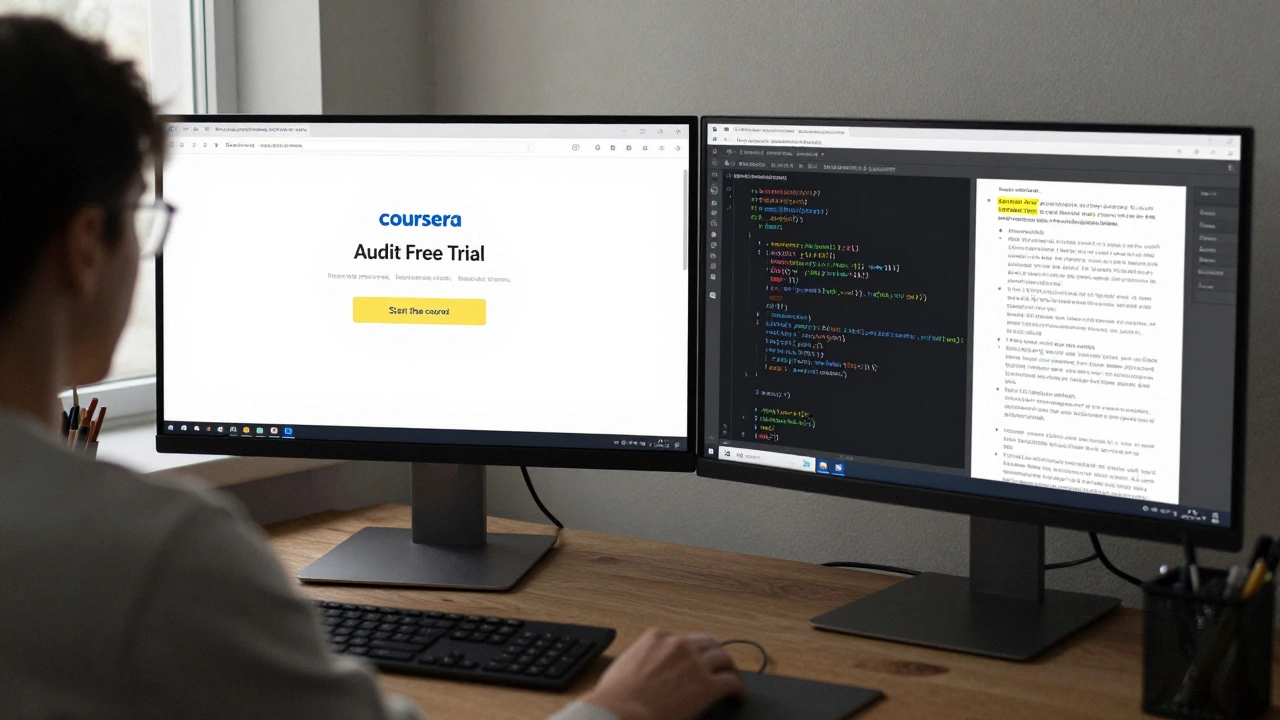
You can still access course content for free, but only in a limited way. This is called the audit mode. When you enroll in a course, there’s usually an option to audit it. If you pick that, you get full access to video lectures, readings, and quizzes. No paywall. No subscription. Just learning.
But here’s the catch: you won’t get a certificate. You won’t get graded assignments. You won’t get access to peer-reviewed projects or instructor feedback. If you just want to learn Python, understand economics, or explore machine learning basics, audit mode works fine. But if you need proof of completion for your resume, job application, or college credit, you’ll need to pay.
Many top courses still offer audit access. For example, Stanford’s Machine Learning course by Andrew Ng, Yale’s Introduction to Psychology, and the University of London’s Business Foundations all let you audit. These aren’t watered-down versions-they’re the same materials used by paying students.
What Changed After 2020?
Before 2020, Coursera was more generous with free access. Back then, you could often get certificates for free through promotions or partnerships with universities. That’s mostly gone now. Coursera shifted its business model to focus on subscriptions, degrees, and corporate training. The free audit option stayed, but everything else became monetized.
They also started hiding the audit option more. Sometimes, when you click on a course, the site pushes you toward the paid version. You have to look closely for the link that says “Audit the course for free.” It’s usually under the “Enroll” button, in smaller text.
How to Find Free Courses on Coursera
Here’s how to actually get free learning without jumping through hoops:
- Go to the Coursera homepage and search for the course you want.
- Click on the course title to open the full page.
- Scroll down past the “Start Free Trial” button.
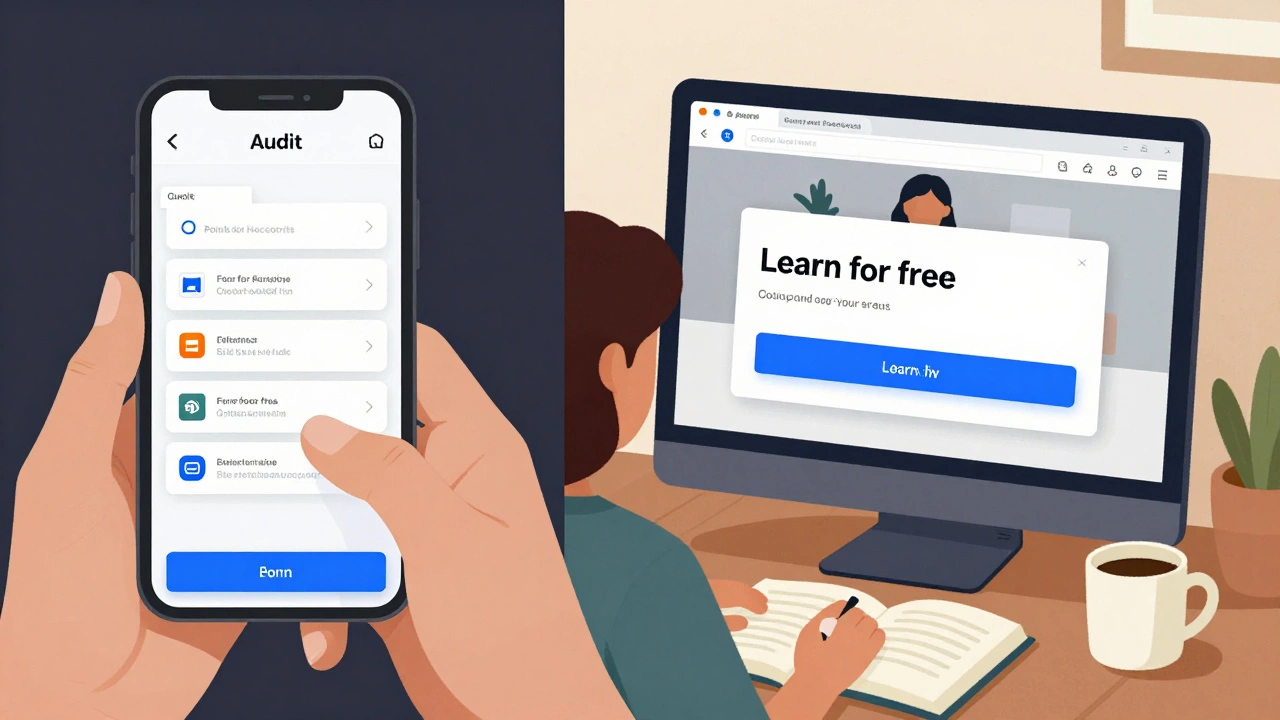
- Look for a link that says “Audit the course” or “Learn for free.”
- Click it. You’ll be enrolled in audit mode.
Pro tip: Use a desktop browser. The audit option is often missing or harder to find on mobile apps.
You can also search for “free courses” on Coursera’s main site. They have a dedicated filter for courses that offer audit access. Just click “Free” under the “Price” filter. That’ll show you over 5,000 courses you can take without paying.
What You Can’t Get for Free
Even if you audit a course, you’ll miss out on:
- Certificates (no PDF or LinkedIn badge)
- Graded assignments and exams
- Access to peer discussion forums (some courses lock these behind payment)
- Hands-on labs (like coding environments or simulations)
- Specializations or professional certificates (these are always paid)
For example, if you audit the Google Data Analytics Professional Certificate, you’ll see all the videos and readings-but you won’t be able to submit your final project. That means no credential, no proof, and no value for employers.
Can You Get Financial Aid?
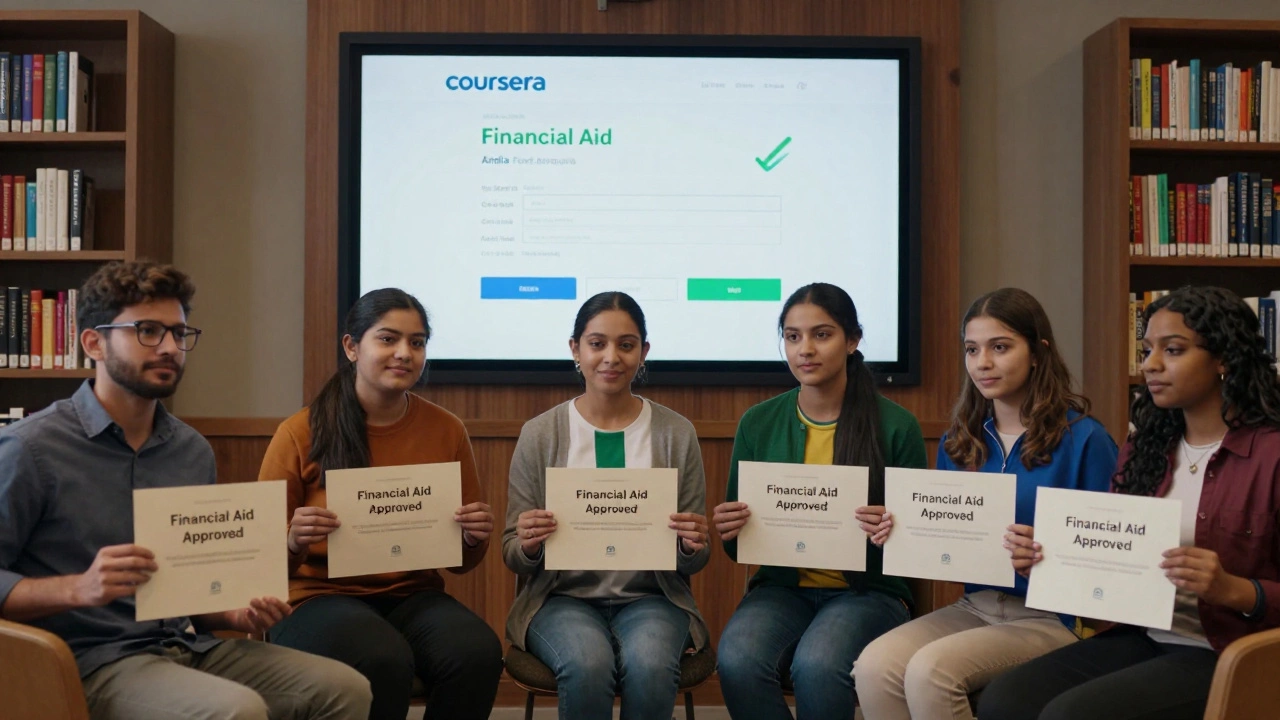
Yes. Coursera offers financial aid for learners who can’t afford the fees. It’s not automatic-you have to apply. But the approval rate is high, especially if you’re from a low-income country or facing economic hardship.
To apply:
- Enroll in the course or specialization you want.
- Click “Apply for Financial Aid” on the payment page.
- Answer a few short questions about your situation.
- Wait 15 days (on average) for a response.
If approved, you get full access to everything-including the certificate-for free. No catch. No trial period. Just the full course, no payment required.
Thousands of people in India, Nigeria, Brazil, and Australia get approved every month. It’s not a secret program-it’s built into the platform.
Free Alternatives to Coursera
If you’re looking for completely free options with certificates, here are a few solid alternatives:
- edX: Offers free audit access to courses from Harvard, MIT, and Berkeley. Some even give free certificates if you meet certain criteria.
- Khan Academy: 100% free, no ads, no sign-up required. Great for math, science, and basic economics.
- MIT OpenCourseWare: Real MIT class materials-lectures, exams, syllabi-all free. No enrollment needed.
- YouTube channels: Channels like freeCodeCamp, CrashCourse, and The Learning Lab offer structured, high-quality content for free.
These platforms don’t always give certificates, but they’re just as valuable if you’re learning for personal growth.
Who Should Use Coursera for Free?
You should audit a Coursera course if:
- You’re exploring a new field before committing to a career change
- You’re a student trying to supplement your studies
- You’re curious but not ready to pay
- You just want to learn without pressure
You should pay if:
- You need a certificate for a job application
- You’re working toward a professional certification
- You want feedback on your work
- You’re using it for university credit
Final Verdict: Is Coursera Still Free?
Coursera isn’t free in the way it used to be. But it’s not gone either. The platform still lets you learn from top universities and companies without paying. If you’re okay with learning without a certificate, you’re getting a world-class education for free.
The real question isn’t whether Coursera is free-it’s whether you need proof. If you do, apply for financial aid. If you don’t, audit away. Thousands of people are learning Python, business strategy, and data science every month without spending a cent. You can too.
Can I get a certificate for free on Coursera?
No, you cannot get a certificate for free unless you receive financial aid. Audit mode gives you access to course materials but not to graded assignments or certificates. The only way to earn a certificate without paying is to apply for and be approved for financial aid.
Do free Coursera courses expire?
Yes, audit access typically lasts for 7 to 14 days, depending on the course. After that, you lose access to videos and assignments unless you pay or apply for financial aid. However, if you’ve already completed the course during the audit period, you can download your progress as a PDF in some cases-check the course details.
Is Coursera’s financial aid really free?
Yes. Financial aid on Coursera is completely free. You don’t have to repay it, and it doesn’t affect your credit. You just need to explain why you can’t afford the course. Most applications are approved within two weeks, especially if you’re from a developing country or facing financial hardship.
Can I use Coursera for university credit without paying?
No. University credit is only available through paid programs like Coursera’s Online Master’s degrees or credit-eligible courses that require tuition. Audit mode does not count toward academic credit. If you’re looking for credit, you’ll need to enroll in a degree program or pay for individual credit courses.
Are all Coursera courses available for audit?
Almost all individual courses are available for audit. But specializations, professional certificates, and degree programs are not. These are bundled offerings that require payment. You can audit the individual courses within a specialization, but not the whole package.